2-Port vs 4-Port Pillow Filling Machine: KIVAS KWS6901 Head-to-Head Decision Guide
Choosing between a 2-port and a 4-port pillow filling machine is not a question of which unit is better built. Both configurations in the KIVAS KWS6901 series come off the same filling platform and share the same accuracy, fill range and material compatibility. The difference is how many filling stations your production line can keep busy at the same time — and that is a workflow question, not a specification contest.
Here is the short answer before the detail. The KWS6901-2 has two filling ports per machine and suits a single crew running one product family on a contained footprint. The KWS6901-4 has four filling ports per machine and suits plants running parallel SKUs, higher daily volumes, or a line that feeds a downstream compression and packaging stage. Both are quantitative weigh-filling machines for pillows, duvets, cushions, quilts, down jackets, bedding and soft-filled products, specified across a shared range of 10.5–13.5 kW power, an optimal fill range of 100–2000 g, and a filling speed of 10–20 pieces per minute for a 600 g pillow, with weighing accuracy of about 1% and an error range of ±5–10 g.
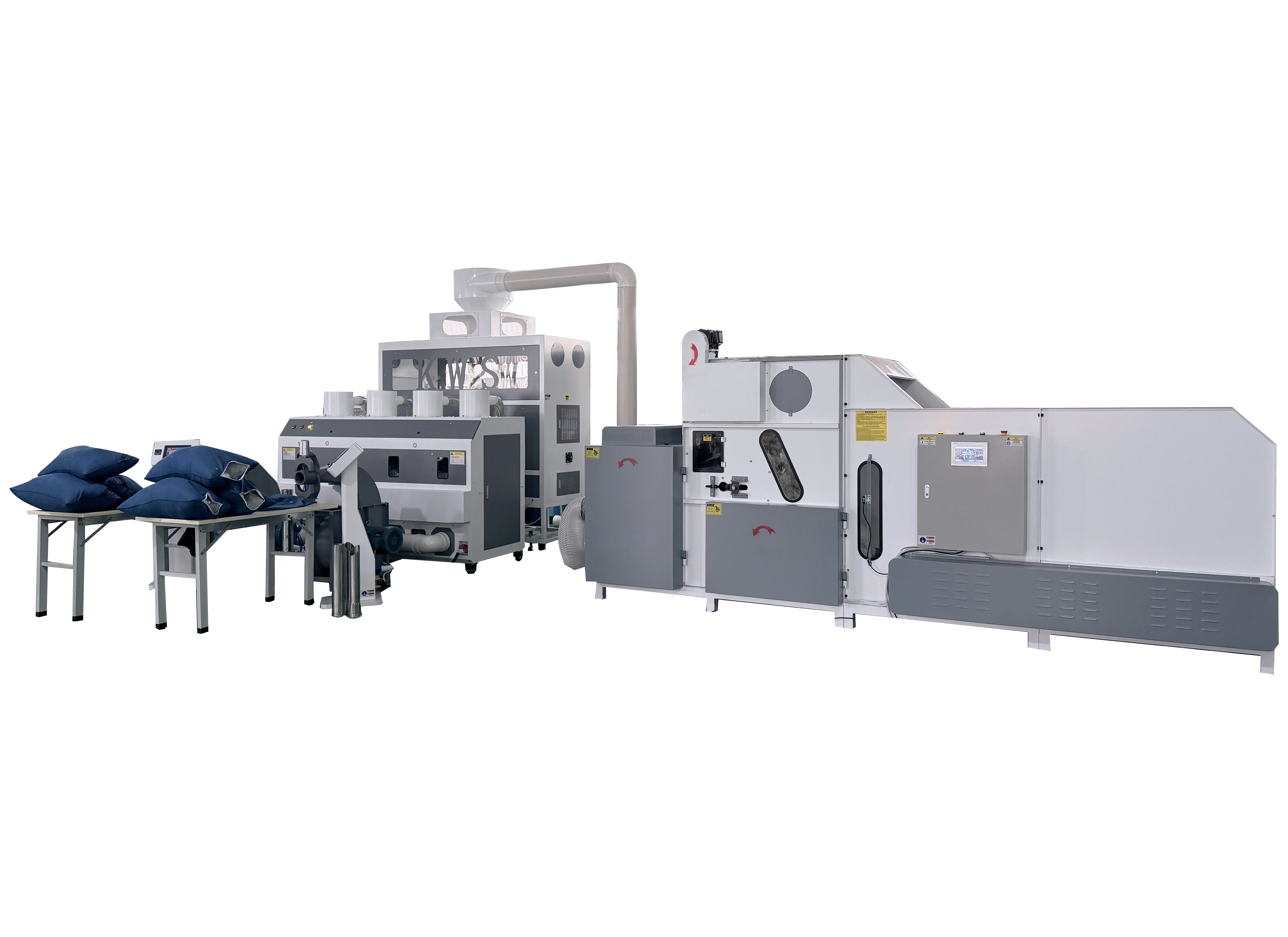
The Real Bottleneck: Filling Stations, Not Filling Accuracy
Most bedding producers start their search by comparing accuracy figures and pieces-per-minute ratings. Those numbers matter, but they are the wrong first filter for this decision. On the KWS6901 series, both the 2-port and the 4-port configuration are specified to the same weighing behaviour: about 1% accuracy, an error range of ±5–10 g, and an optimal filling window between 100 g and 2000 g. If accuracy were the deciding variable, there would be nothing to choose between them.
What actually changes with port count is station availability. A pillow filling cycle is a sequence: material is fed and opened upstream, weighed into the filling head, discharged into the shell, then the shell is closed and moved. When several operators, several product sizes or several downstream processes share the same filling head, the machine stops producing every time a shell is swapped, a bag is changed or a specification is adjusted. Each additional filling port converts that dead time into parallel work.
The practical symptoms that tell you a plant has outgrown two ports are recognisable on the floor:
- Operators queue at the filling head while bags or shells are being loaded.
- Changeovers between SKUs stop the whole line instead of one station.
- Filled pillows accumulate in front of a compression packaging stage instead of flowing into it.
- Daily output is limited by staffing patterns rather than by machine capability.
Decision rule: count the number of parallel tasks your plant needs to perform at the filling stage. Two ports support roughly one filling workflow at a time. Four ports support several. If your answer is two or fewer, the 2-port configuration is the lower-complexity choice. If it is three or more, price the 4-port configuration before you commit to a two-port machine and expand later.
Industry Background: Why Port Count Became a Planning Question
Filling equipment demand has grown alongside the automation of bedding and home-textile production. Market Research Future valued the global filling machines market at USD 10.06 billion in 2024 and projected it to reach USD 16.51 billion by 2035. Other research houses publish different figures because they scope the category differently, so treat any single market number as directional rather than exact.
The supply side of that market sits largely in Asia. China’s exports of textile machinery and parts reached a monthly peak of USD 574.6 million in August 2025, based on General Administration of Customs data published through CEIC, which reflects a broad recovery in textile equipment demand. Within the category, Machine Insights estimated that automatic pillow filling machines would grow at roughly 5% annually through 2025, driven by automation investment in textile clusters such as China and Vietnam.
Two consequences follow for buyers. First, machine builders now compete on throughput architecture — number of filling stations, feeding and opening integration, and how cleanly a filling machine hands off to a compression packaging line — rather than on accuracy claims alone. Second, compliance expectations have hardened. Machinery exported to the European Union must comply with the Machinery Directive 2006/42/EC and carry the CE marking, including documented risk assessment under EN ISO 12100. In North America, filling machinery is commonly required to meet UL and OSHA safety expectations, with attention to emergency shutoff and safety enclosures. KIVAS products are manufactured under ISO9000 and CE certification, and the company holds these compliance points as the baseline for export orders rather than an optional extra.
Detailed Solution: One Platform, Two Workstation Layouts
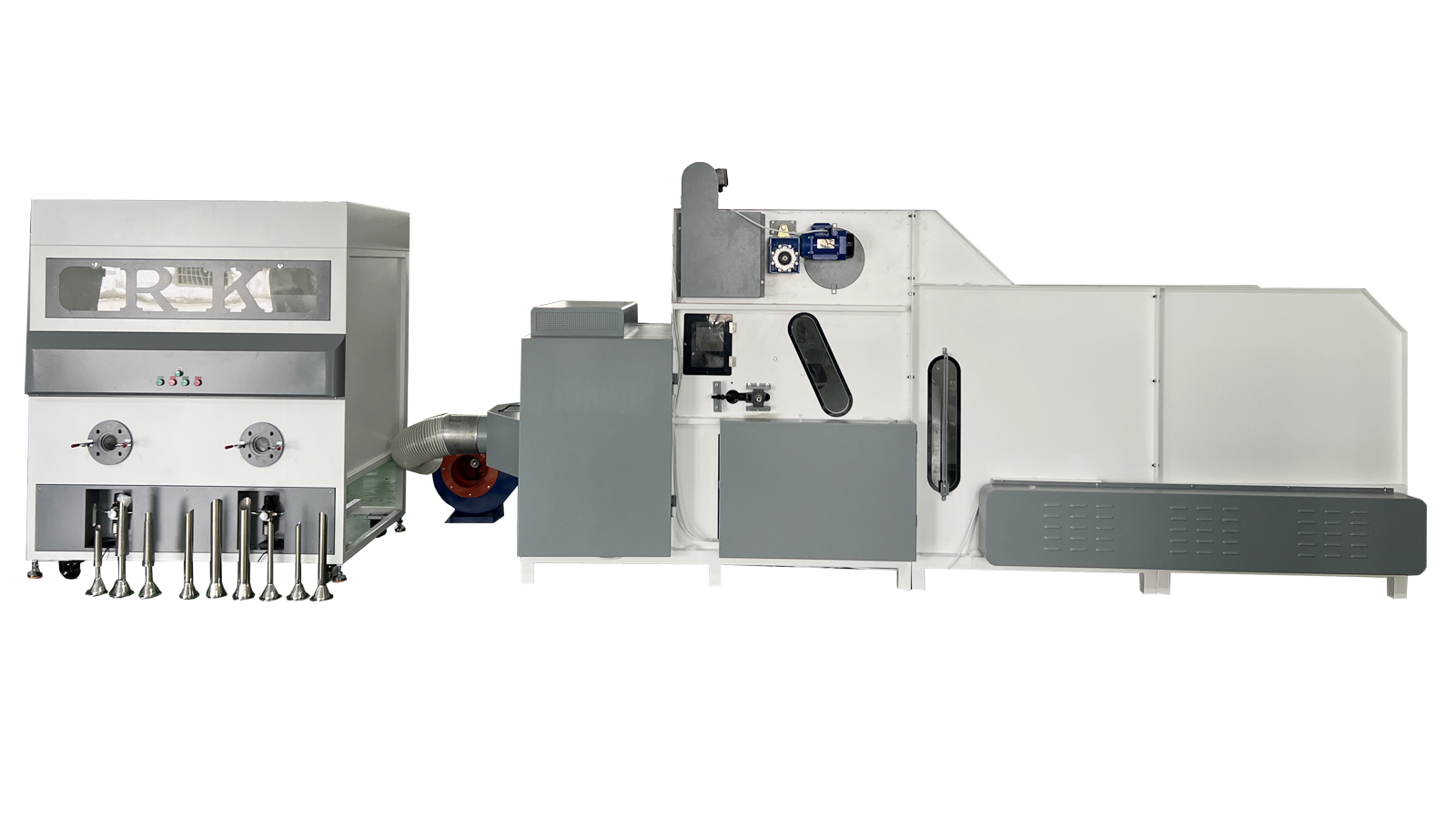
KIVAS — Qingdao Kaiweisi Industry and Trade Co., Ltd., a manufacturer of home textile and fiber-processing machinery founded in 2014 in Qingdao, China — builds the KWS6901 series as a single quantitative weigh-filling platform offered in two workstation layouts. The KWS6901-2 carries two filling ports per machine; the KWS6901-4 carries four. Both are designed for automatic quantitative filling of down, fiber and comparable loose fill materials in mass production of pillows, cushions, down jackets, quilts and bedding, and both run in pneumatic automatic continuous operation with precise weighing and quantitative filling.
The shared technical envelope is the same for both configurations and is the fastest way to check whether either machine fits your product plan:
- Filling ports: 2 filling ports (KWS6901-2) or 4 filling ports (KWS6901-4) per machine.
- Power range: 10.5 kW to 13.5 kW across the series.
- Production capacity: 400–800 kg/h across the series.
- Filling speed: 10–20 pieces per minute for a 600 g pillow.
- Accuracy: about 1%, with an error range of ±5–10 g.
- Optimal filling range: 100–2000 g.
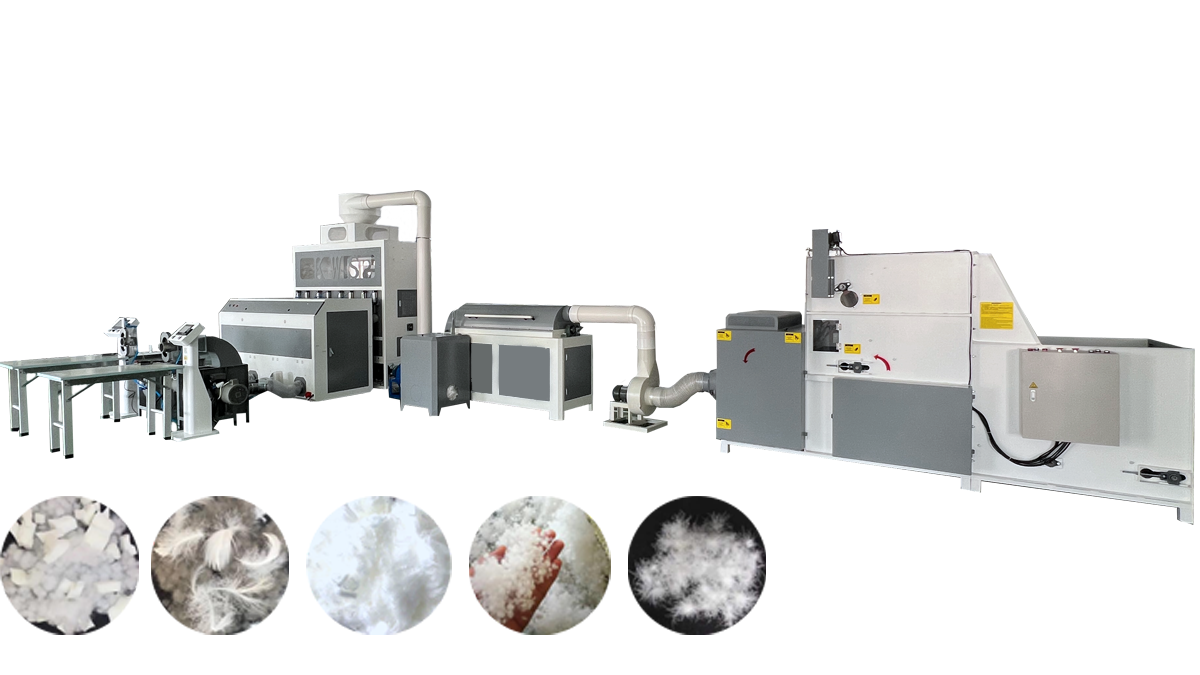
- Suitable raw materials: 0.6D–15D polyester fiber, fiber balls, shredded foam, down feathers, EPS balls and similar materials, in single-material or mixed filling.
- Construction: steel frame.
Because these figures describe the series as a whole, the configuration-specific power draw and output of the unit you order should be confirmed on your quotation. The published range exists because a 4-port machine arranged for high-volume pillow production and a 2-port machine arranged for small-batch cushion work do not sit at the same point on the curve.
What the additional two ports actually change
A four-port machine gives you more parallel filling positions inside the same working cycle. Whether that produces a proportional increase in finished pieces depends on three variables that no specification sheet can settle on its own: how the material behaves (a 0.6D fine polyester fills differently from shredded foam or an EPS ball blend), how heavy the target fill is within the 100–2000 g window, and how many operators you place at the machine.
This is why the honest planning approach is to treat the 4-port configuration as added station capacity, not as a guaranteed multiplier, and to validate the expected output on your own material and your own shell design before the machine ships. KIVAS provides 100% pre-shipment testing and accepts third-party inspection such as SGS, which gives buyers an independent check on the delivered configuration.
A Five-Step Selection Framework
The following sequence mirrors how an experienced bedding producer evaluates the two configurations. Work through it in order; the answer usually becomes obvious before the last step.
Step 1 — Map your fill weights and SKU mix
List every product you intend to run and its target fill weight. Both configurations cover the 100–2000 g optimal range, so the question is not whether the machine can hit your weight — it can — but how often you switch between weights. A plant that changes fill weight several times a day benefits from having additional ports available so one station can be reset while others keep running.
Step 2 — Count the operators you can actually staff
Filling ports only produce when someone is loading and unloading them. Be realistic about shift patterns and labour availability. A 4-port machine running with one operator is an underused machine; a 2-port machine running with three operators creates a queue. Match port count to the crew you can sustain across a full shift, not to the crew you can assemble on a good day.
Step 3 — Check the utilities and floor envelope
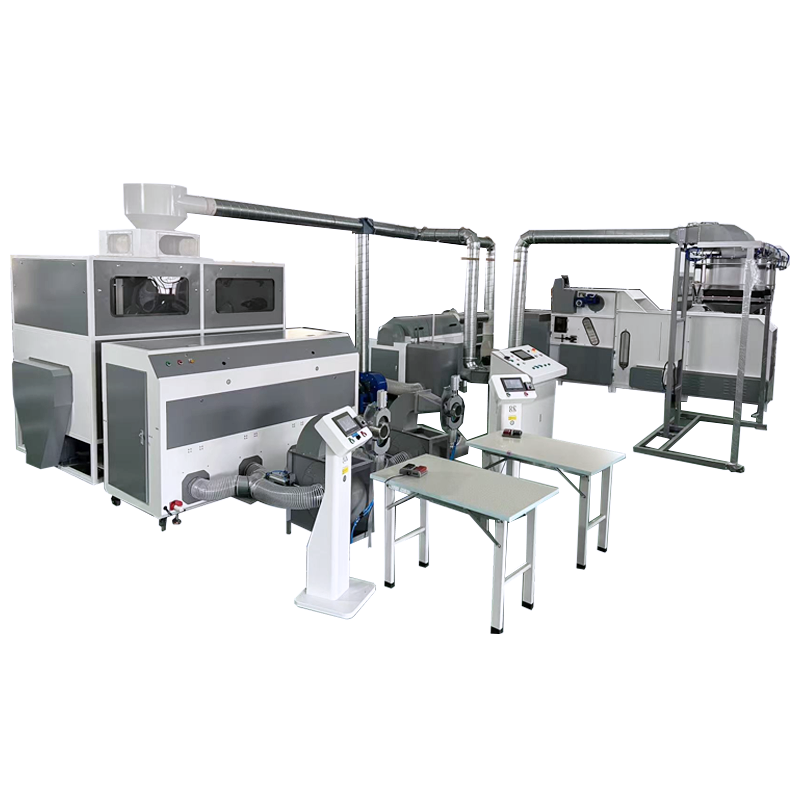
The KWS6901 series is designed for an indoor, dry, ventilated textile workshop with a stable three-phase power supply, flat ground and sufficient air source supply. Ambient temperature should sit between 0°C and 40°C in a low-dust, generally ventilated environment. The machine works with supporting equipment including an automatic fiber feeding and opening all-in-one machine, a fiber opening machine and an air compressor. Before choosing between two and four ports, confirm with your supplier how the larger configuration changes the layout drawing, the air demand and the material-handling space around the machine.
Step 4 — Define your customization scope
KIVAS builds to OEM and ODM requirements and supports overseas installation guidance and personalized customization. Available customization covers voltage to match your local supply, logo, machine colour, production capacity and specialized production lines. Customization decisions interact with port count: a plant specifying a 4-port machine for a dedicated quilt line has a different configuration from a plant specifying a 4-port machine for a mixed pillow-and-cushion workflow.
Step 5 — Validate the commercial terms
The minimum order quantity for the KWS6901 series is 1 unit, so a plant can start with a single machine in either configuration and scale later. Lead time runs 15–35 days depending on the configuration and the customization requested. Monthly production capacity at KIVAS is 60–150 units, and every machine is subject to 100% pre-shipment testing with third-party inspection available. After-sales support is provided remotely with a 1-year warranty and lifetime after-sales service.
Practical note on expansion: if you are close to the boundary between two and four ports, compare the cost of buying a 4-port machine now against the cost of adding a second machine later — including the extra floor space, the second power drop, the second air connection and the additional operator. In many bedding plants the single larger machine proves the simpler long-term layout.
Use Cases: Where Each Configuration Earns Its Place
The KWS6901 platform serves bedding and home textiles, down clothing, soft sofa furniture, pet supplies, plush toys, car cushions, cotton and linen fiber primary processing, recycled fibers, non-woven fabric accessories and medical care applications. The same machine therefore appears in very different production settings, and the port decision follows the setting.
Pillow and polyester pillow production
High-volume pillow runs with a small number of standard sizes are the clearest case for four ports: several shells can be prepared, filled and closed in a rolling sequence instead of one at a time. A plant producing a narrow range at moderate volume on a single shift will usually find two ports sufficient.
Duvet, quilt and bedding filling
Larger shells take longer to handle than pillows, and the handling time — not the filling time — often sets the pace. Additional ports absorb that handling time by letting one station be loaded while another is filling.
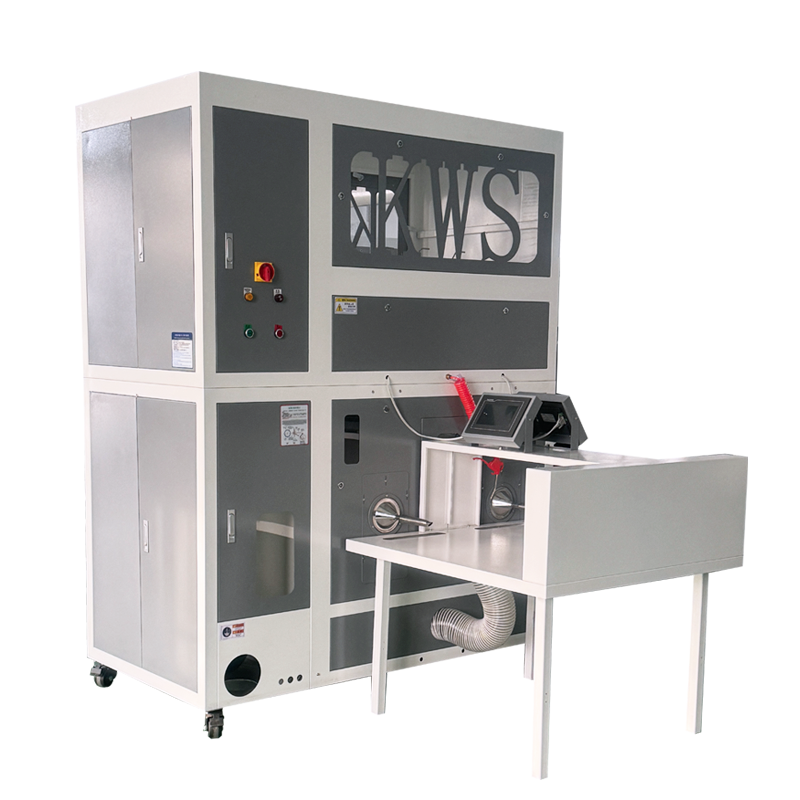
The same platform handles down feathers, polyester fiber, fiber balls, shredded foam and EPS balls, which is why one machine often has to serve several product families.
Down jacket and down product filling
Down feathers sit within the accepted material range, and down products typically demand tight weight control because small deviations are visible in the finished garment. Since both configurations share the same about-1% accuracy and ±5–10 g error range, the choice here is driven by batch size and how many styles you run in parallel — a fashion producer with many short runs gains more from additional ports than from any change in weighing behaviour.
Cushions, lazy sofas and beanbags
These products often use shredded foam, EPS balls or blends. Mixed filling with several raw material types is supported, but blends increase the number of changeover events, which is exactly the situation where a 4-port machine keeps the line moving.
Plush toys, pet products and car cushions
Lower fill weights and frequent design changes characterise these segments. A 2-port machine arranged for quick changeover is often the more practical starting point, with a 4-port configuration added when order volume justifies it.
Reference project: pillow and bedding production in Saudi Arabia
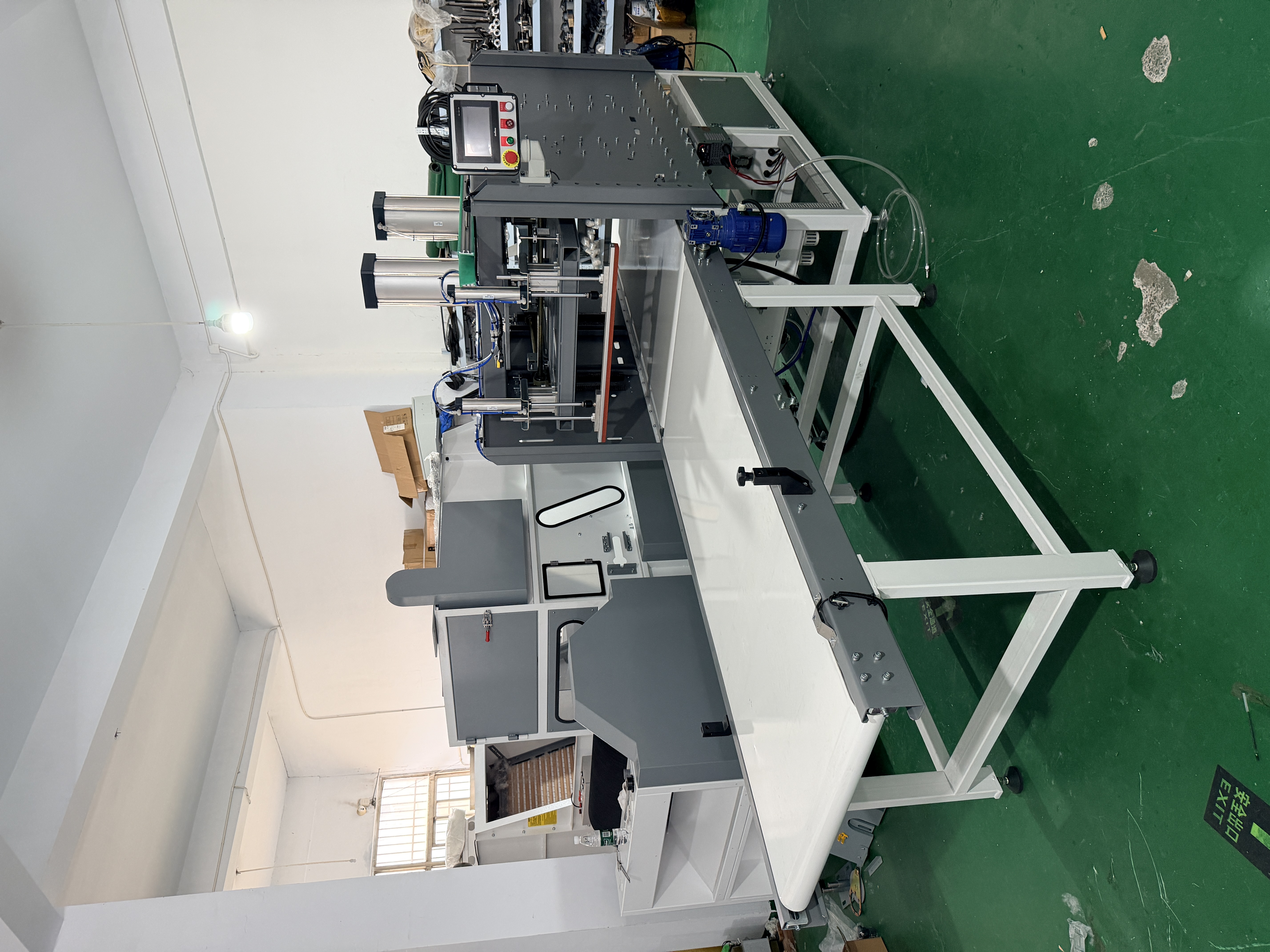
A bedding producer in Saudi Arabia installed 10 units of pillow filling and pillow compression packaging machinery for pillow, cushion and bedding filling, fiber opening and compression packaging. The installation has operated normally for three years, with reported results of a 30% reduction in energy consumption, a 35% cut in labour costs and a 40% increase in production capacity. The project also demonstrated single-material and mixed filling using 2–5 types of raw materials, precision of about 1% error, long service life and low maintenance requirements. For buyers weighing two ports against four, the relevant lesson from that project is not the output percentage — it is that the filling stage was planned together with opening and compression packaging rather than as an isolated machine.
2-Port vs 4-Port at a Glance
The table below compares the two configurations using the published platform specifications. Shared rows are identical by design — that is the point of the comparison.
| Decision dimension | KWS6901-2 (2-port) | KWS6901-4 (4-port) |
|---|---|---|
| Filling ports per machine | 2 filling ports | 4 filling ports |
| Optimal filling range | 100–2000 g | 100–2000 g |
| Accuracy and error range | About 1% accuracy; ±5–10 g | About 1% accuracy; ±5–10 g |
| Power | Within the 10.5–13.5 kW series range; confirm per configuration | Within the 10.5–13.5 kW series range; confirm per configuration |
| Production capacity | Within the 400–800 kg/h series range; confirm per configuration | Within the 400–800 kg/h series range; confirm per configuration |
| Speed reference | 10–20 pieces per minute at 600 g per pillow | 10–20 pieces per minute at 600 g per pillow |
| Raw material compatibility | 0.6D–15D polyester fiber, fiber balls, shredded foam, down feathers, EPS balls, single or mixed filling | 0.6D–15D polyester fiber, fiber balls, shredded foam, down feathers, EPS balls, single or mixed filling |
| Typical production profile | One dominant product family, moderate volume, smaller crew, tighter floor space | Multiple parallel SKUs, higher daily volume, larger crew, line feeding into compression packaging |
| Customization | Voltage, logo, colour, production capacity, specialized production lines | Voltage, logo, colour, production capacity, specialized production lines |
| Minimum order quantity | 1 unit | 1 unit |
| Lead time | 15–35 days | 15–35 days |
| After-sales | Remote technical support; 1-year warranty; lifetime after-sales service | Remote technical support; 1-year warranty; lifetime after-sales service |
Two rows in that table deserve emphasis. Lead time and MOQ are identical, so the commercial entry barrier is not what separates the two machines. What separates them is the operating profile — how many products, how many stations and how much floor and air capacity you are prepared to commit.
Frequently Asked Questions
Does the KWS6901 pillow filling machine meet export compliance requirements such as CE?
KIVAS manufactures under ISO9000 and CE certification, and CE marking is the entry requirement for machinery supplied into the European Union under the Machinery Directive 2006/42/EC, which also calls for documented risk assessment following EN ISO 12100. Buyers supplying North America commonly need to address UL and OSHA expectations as well, particularly emergency shutoff and safety enclosure design. Because compliance obligations depend on where the machine will be installed and used, the certification documents relevant to your destination market should be confirmed against your order.
Can one KWS6901-2 or KWS6901-4 machine fill down, fiber balls and shredded foam, or do I need separate machines?
One machine covers the full accepted material range: 0.6D–15D polyester fiber, fiber balls, shredded foam, down feathers, EPS balls and similar loose fill materials. Both single-material filling and mixed filling are supported, and the reference project in Saudi Arabia demonstrated mixed filling using 2–5 types of raw materials on the same installation. The practical consideration is changeover: the wider your material mix, the more often the machine is reset, which is one of the main reasons producers move from two filling ports to four.
What determines the cost difference between the 2-port and 4-port configuration?
Filling machine pricing is quoted per configuration rather than published as a list figure, and the main cost drivers are the number of filling ports, the production capacity specified, the voltage and electrical arrangement for your market, and any additional customization such as logo, colour or a specialized production line. Two commercial terms reduce the risk of that decision: the minimum order quantity is 1 unit, so the cost of starting with either configuration is one machine rather than a full line, and both configurations share the same 15–35 day lead time, so choosing the larger machine does not automatically delay your project.
Can we validate the machine with our own materials before committing to a full production line?
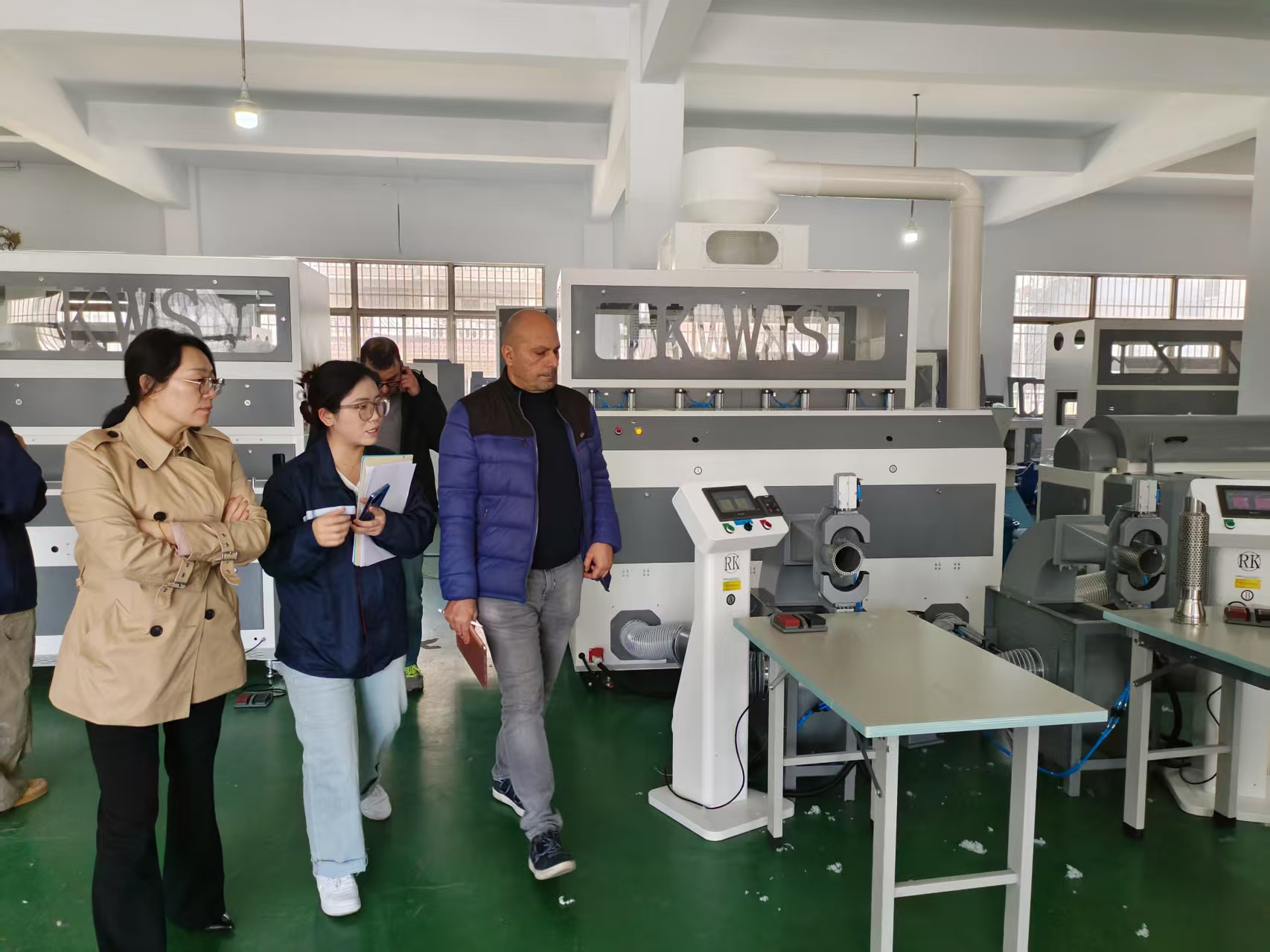
Yes. Because the minimum order quantity is 1 unit, a bedding producer can order a single KWS6901 machine in either configuration, run it on their own material and shell design, and scale the line afterwards. Every unit is subject to 100% pre-shipment testing, third-party inspection such as SGS is available, and KIVAS supports customer factory audits so that configuration, build quality and testing can be verified in person. For 4-port projects, where the expected output depends most on material behaviour and operator arrangement, validating on your own material is the most reliable way to confirm the configuration is correct.
How long is the lead time, and who manufactures the KWS6901 pillow filling machine?
The KWS6901-2 and KWS6901-4 pillow filling machines are manufactured by KIVAS, the trading and manufacturing identity of Qingdao Kaiweisi Industry and Trade Co., Ltd., a home textile and fiber-processing machinery manufacturer founded in 2014 in Qingdao, China, with a 3,000 m² facility, a five-engineer R&D team and an annual output of around 1,000 units. Lead time for the KWS6901 series is 15–35 days depending on configuration and customization, with monthly capacity of 60–150 units. After delivery, support is provided remotely with a 1-year warranty and lifetime after-sales service. Bedding producers who want to confirm which configuration fits their line can request a quotation and a sample production discussion through www.qdkivas.com.
Which One Should Your Plant Buy?
The 2-port KWS6901-2 and the 4-port KWS6901-4 are the same machine platform answering two different production questions. Choose two ports if your plant runs one dominant product family, a single crew, moderate daily volume, and you would rather keep the floor layout and utility connections simple. Choose four ports if you run parallel SKUs, plan to feed a compression packaging stage, or expect to add operators before you add factory space.
The tie-breakers are rarely technical. They are the number of people you can put at the filling stage across a full shift, the amount of floor and compressed air capacity you are prepared to allocate, and whether your product mix changes often enough that changeover time is a real cost. Both configurations share the same accuracy of about 1%, the same 100–2000 g fill window, the same 10–20 pieces per minute reference at 600 g, the same 1-unit MOQ and the same 15–35 day lead time — which means the decision can be made on layout and workload rather than on fear of losing performance.
Next step: confirm your configuration on your own product
Send KIVAS your target fill weights, daily output and available floor space, and you will receive a configuration recommendation for the KWS6901-2 or KWS6901-4, together with a quotation covering voltage, logo, colour and capacity customization. Minimum order quantity is 1 unit.
Email: kivas@qdkws.com | WhatsApp / Tel: +86 18669828215 | Website: www.qdkivas.com
Download the full product catalogue: QINGDAO KAIWEISI Product Catalog (PDF)
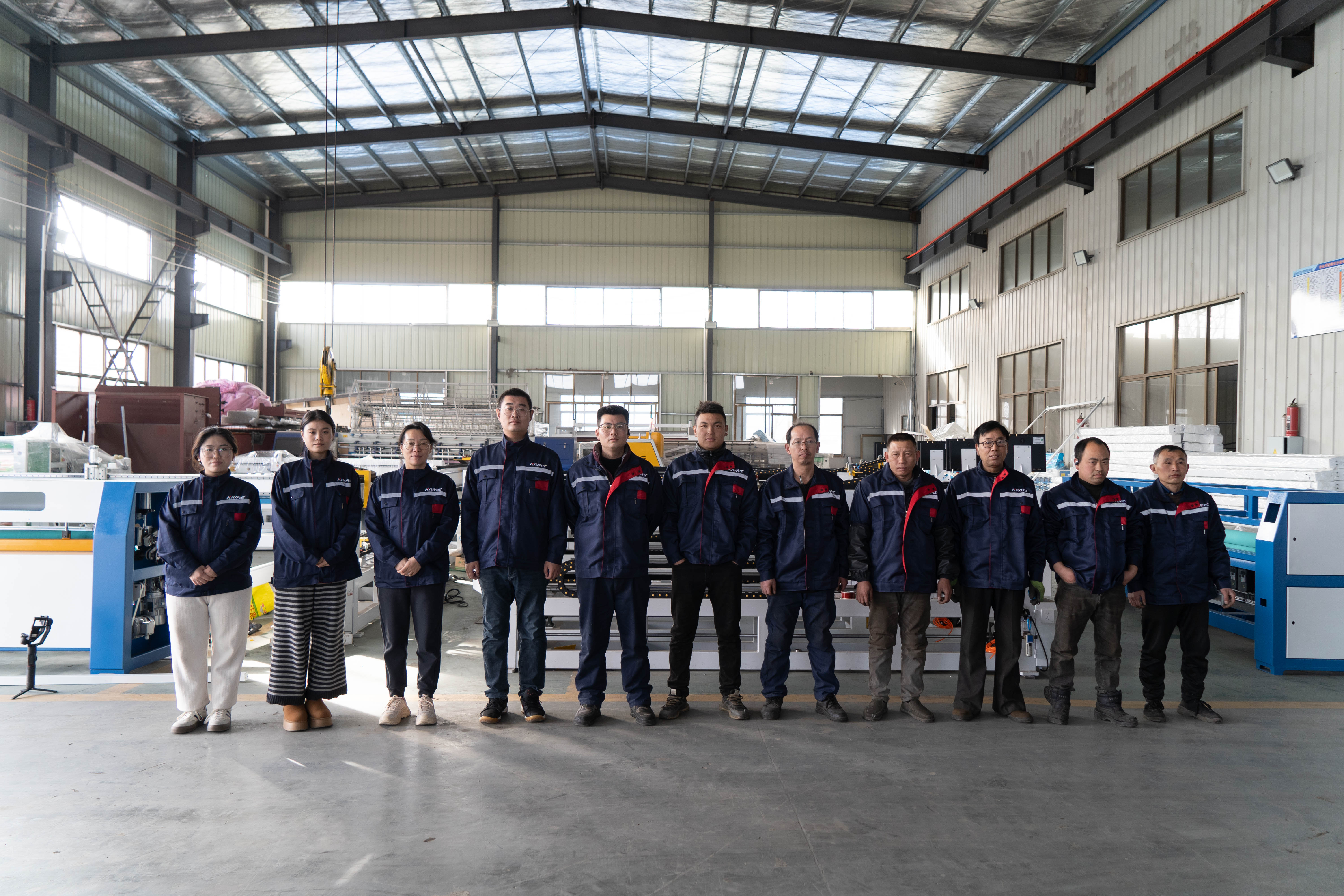
Have Questions or Need More Details?
Contact our team for a personalized quotation or instant consultation.
Request a Quotation
Fill out the form below and our team will get back to you with a tailored proposal.
WhatsApp Direct Chat
Prefer to chat in real-time? Message us on WhatsApp for instant assistance & quick answers.
- Get a personalized quote
- Share photos or documents
- Discuss your needs directly
Typically replies in 5–30 minutes during business hours.