2-Port vs. 4-Port Pillow Filling Machines: Configuration Guide
A 2-port and a 4-port pillow filling machine are the same platform with a different number of filling positions. Within the KIVAS KWS6901 series, the KWS6901-2 and the KWS6901-4 share a steel build, a 10.5–13.5 kW power range, a 100–2000 g optimal fill range, and a published family filling speed of 10–20 pieces per minute for a 600 g pillow. What the port count changes is how many fill positions operate in parallel — and therefore how output, staffing, and product mix have to be planned around the machine.
This guide is written for bedding and home textile producers who have moved past first discovery and are now researching and evaluating a configuration. It separates the platform facts that are fixed across both models from the decision factors that genuinely differ, then works through output goals, product mix, and staffing, before closing on the customization, delivery, testing, and service terms that belong in the same evaluation.
Short answer: a 4-port machine (KWS6901-4) fits production where filling is a dedicated station with a standing crew, or where pillow, cushion, and quilt SKUs share the same shift. A 2-port machine (KWS6901-2) fits a producer running one dominant SKU with operators who also handle downstream tasks. Both share the same 100–2000 g fill range, roughly 1% accuracy, and a 10.5–13.5 kW power band.
Problem Definition: What a Bedding Producer Is Really Deciding
The port-count question rarely arrives on its own. In practice it appears in three forms. A producer is replacing manual or semi-manual filling and cannot tell how much capacity to buy. A producer is adding cushions, quilt filling, or toy filling to a pillow line and is unsure whether one machine can absorb the extra work. Or a producer holds two quotations — one 2-port, one 4-port — both pitched against the same output target, with no clear basis for comparison.
All three are output-planning problems wearing a hardware label. The relevant variables are pieces per shift, the weight band of the products, how many operators can stand at the filling station, and how much spare capacity the business needs for seasonal peaks. Port count is the answer to those variables, not a stand-alone specification.
Two failure modes are worth naming. Over-specifying leaves filling positions idle while the machine still occupies floor space and draws from the 10.5–13.5 kW power band. Under-specifying caps the line at the moment demand grows, and the usual response — adding a second machine — needs its own floor space, air supply, and operator. Because the minimum order quantity for a KIVAS machine is one unit, correcting a wrong choice later is possible; it is simply not free.
Industry Background: Why Filling Capacity Gets Re-Specified
Bedding and home textile filling is a mature category, but the production requirement inside it keeps shifting. The same workshop is now often asked to deliver a pillow range in several weights, a duvet and quilt line, cushions, and plush or pet products — sometimes in the same week. Filling equipment built for one stable product and one stable weight tends to become the bottleneck first, because every downstream step depends on a correctly weighed shell.
Market-level data supports the direction without settling the machine-level question. Market Research Future's pillow packing machine report projects the category moving from USD 16.45 billion in 2025 to USD 25.5 billion by 2035, a 4.48% CAGR across 2025–2035. That figure describes the wider pillow packing category rather than filling heads specifically, so it is a demand signal rather than a forecast for a single machine model.
Two practical constraints shape how the equipment is installed. First, the working environment: an indoor, dry, ventilated textile workshop, ambient temperature 0 °C to 40 °C, low dust, a stable three-phase power supply, flat ground, and sufficient air supply. Second, the supporting equipment: an automatic fiber feeding and opening all-in-one machine, a fiber opening machine, and an air compressor. A port-count decision made before those two constraints are confirmed tends to be revisited during installation.
For buyers handling import documentation, filling machinery is generally classified under HS code 8422.30. Classification should be confirmed for the specific machine and destination before the shipment is booked.
The KWS6901 Platform: What Both Configurations Share
Before the port count is compared, it helps to be precise about what does not change. The KWS6901 series is a pneumatic, automatic, continuous filling platform that weighs and fills quantitatively. The following specifications are published for the series:
- Workstations: 2 filling ports (KWS6901-2) or 4 filling ports (KWS6901-4) per machine.
- Power range: 10.5 kW to 13.5 kW.
- Production capacity: 400–800 kg/h.
- Filling speed: 10–20 pieces per minute for a 600 g pillow across the series.
- Accuracy: approximately 1%, with an error range of ±5–10 g.
- Optimal filling range: 100–2000 g.
- Build material: steel.
- Suitable raw materials: 0.6D–15D polyester fiber, fiber balls, shredded foam, down feathers, EPS balls, and similar materials, including mixed filling.
- Applications: bedding and home textiles, down clothing, soft sofa furniture, pet supplies, plush toys, car cushions, cotton and linen fiber primary processing, recycled fibers, non-woven fabric accessories, and medical care.
Reading the ranges correctly: power, capacity, and speed are published as series ranges, not as fixed values per port count. The exact figure for a given port count, voltage, and material set is confirmed on the quotation and should be written into the order.
What the 2-Port Configuration Is Built For
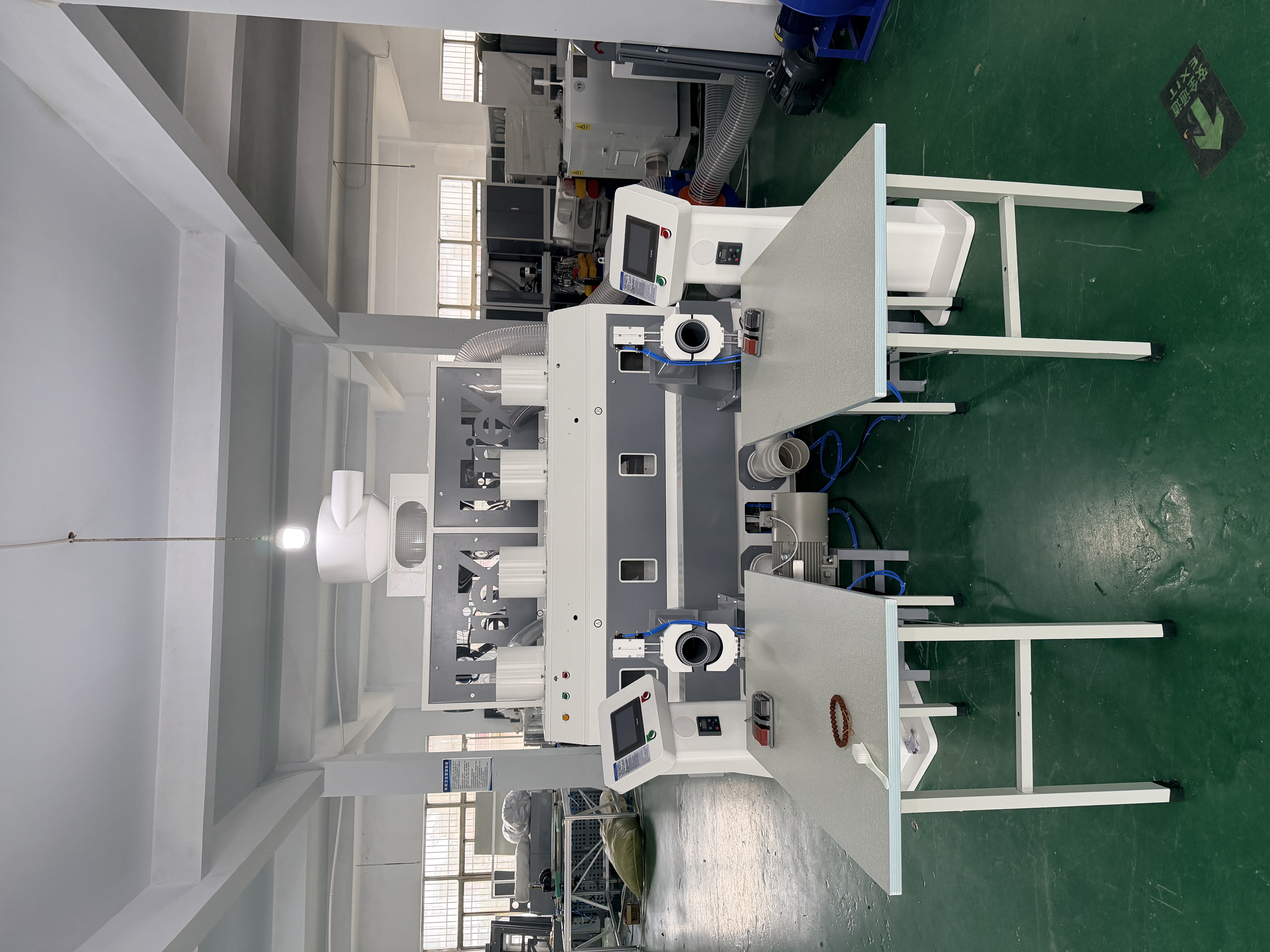
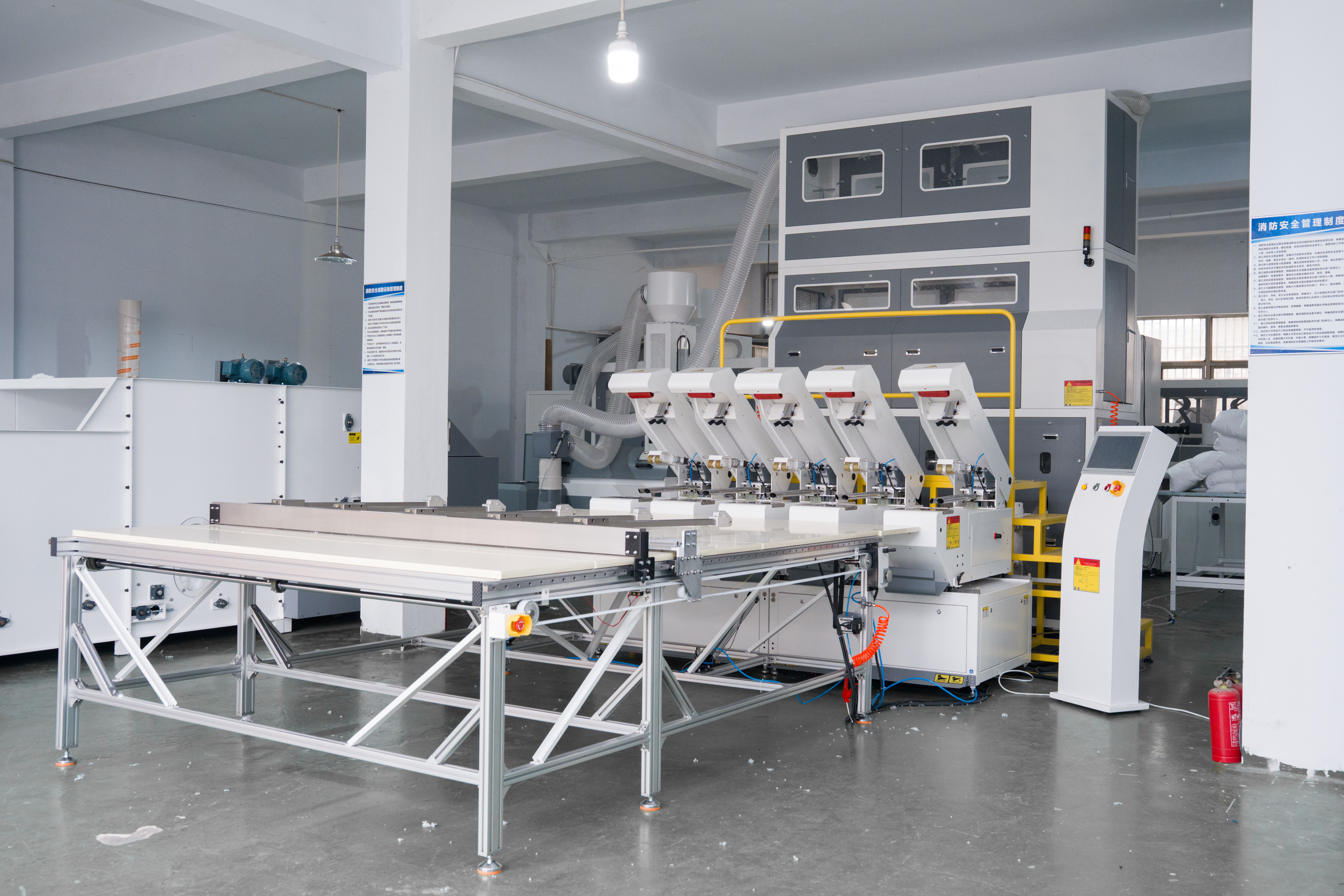
KWS6901-2 places two filling positions on the steel frame. Two ports suit a producer whose output is concentrated in one dominant pillow weight, where the same operators move between filling and downstream tasks such as closing, inspection, or packing. The machine matches a crew that cannot keep four positions continuously fed, and it keeps the line footprint and the utility load inside the lower part of the series' 10.5–13.5 kW band.
What the 4-Port Configuration Is Built For
KWS6901-4 places four filling positions on the same platform. Four ports suit a workshop where filling is a dedicated station with a standing crew, or where several products — pillows, cushions, quilt and duvet shells — are filled in the same shift and the operator count is already high enough to keep the positions occupied. The same 100–2000 g range and roughly 1% accuracy apply; the difference is throughput per cycle and the number of operators the station can absorb.
Step-by-Step: Choosing Between Two and Four Ports
The sequence below converts a capacity question into a configuration choice. Each step produces a number or a decision that can be written into a specification.
- Fix the output target in both pieces and kilograms per shift. Pillow output is usually planned in pieces, but material purchasing, opening equipment, and air demand are planned in kilograms. Series capacity is published at 400–800 kg/h, so the target quickly shows whether the machine is being sized for a single shift or for peak loading.
- Map the weight band of the product range. The optimal filling range is 100–2000 g. If every SKU sits comfortably inside that band, one machine type covers the range and the port count becomes the only variable. If some products fall outside it, that is a separate equipment question, not a port-count question.
- Count the operators the filling station can hold. A 4-port machine only earns its extra positions if four positions can be kept fed. Where the same two operators also handle packing, two ports are the more honest match.
- Confirm the site conditions. Stable three-phase power, flat ground, sufficient air supply, and a dry, ventilated workshop at 0–40 °C. This step also fixes the supporting equipment list: an automatic fiber feeding and opening all-in-one machine, a fiber opening machine, and an air compressor.
- Decide the port count. Steps 1 to 4 normally settle it. Where the answer sits between the two, size for the peak season rather than the average month, then confirm the power figure for the chosen configuration.
- Specify the customization. Voltage, logo, color, production capacity, and dedicated production lines are available as customization options, under OEM, ODM, overseas installation guidance, or personalized customization.
- Lock the commercial terms. MOQ is one unit; lead time is 15–35 days; monthly production capacity is 60–150 units.
- Set acceptance and service expectations. Every machine is subject to a 100% pre-shipment test, third-party inspection such as SGS can be arranged, and after-sales covers remote technical support, a one-year warranty, and lifetime after-sales service.
Use Cases: Which Configuration Fits Which Producer
High-volume polyester pillow producer. One dominant pillow weight, a stable crew, and a single shift pattern. A 2-port polyester pillow filling machine keeps the station proportionate to the crew; when demand grows past what two positions absorb, a second unit or a move to four ports becomes the next step rather than an upfront overspend.
Multi-SKU bedding plant. Pillows, cushions, duvet shells, and quilt filling on the same floor. Filling becomes a dedicated station with a standing team, which is the case where a 4-port bedding filling machine earns its place: four positions let different products be filled without stopping the station between SKUs.
Cushion, lazy sofa, and beanbag producer. Shredded foam and EPS balls behave differently from polyester fiber, both in the hopper and in the shell. The KWS6901 series is specified for shredded foam, EPS balls, and mixed filling, and the Saudi project described below ran single and mixed filling with two to five raw material types on the same platform.
Toy and pet product filling. Plush toys and pet cushions usually need smaller, more frequent fills rather than long runs. A toy filling machine drawn from the same platform keeps the 100–2000 g range available for both the toy line and the pillow line, which matters where one workshop serves both.
Down and down-jacket producers. The series is specified for down feathers alongside fiber and foam, and KIVAS also builds weighing down jacket filling machines as a separate product line. Producers filling both bedding and garments should confirm the material set and fill range per product before choosing the port count.
Field Evidence: A Ten-Unit Project in Saudi Arabia
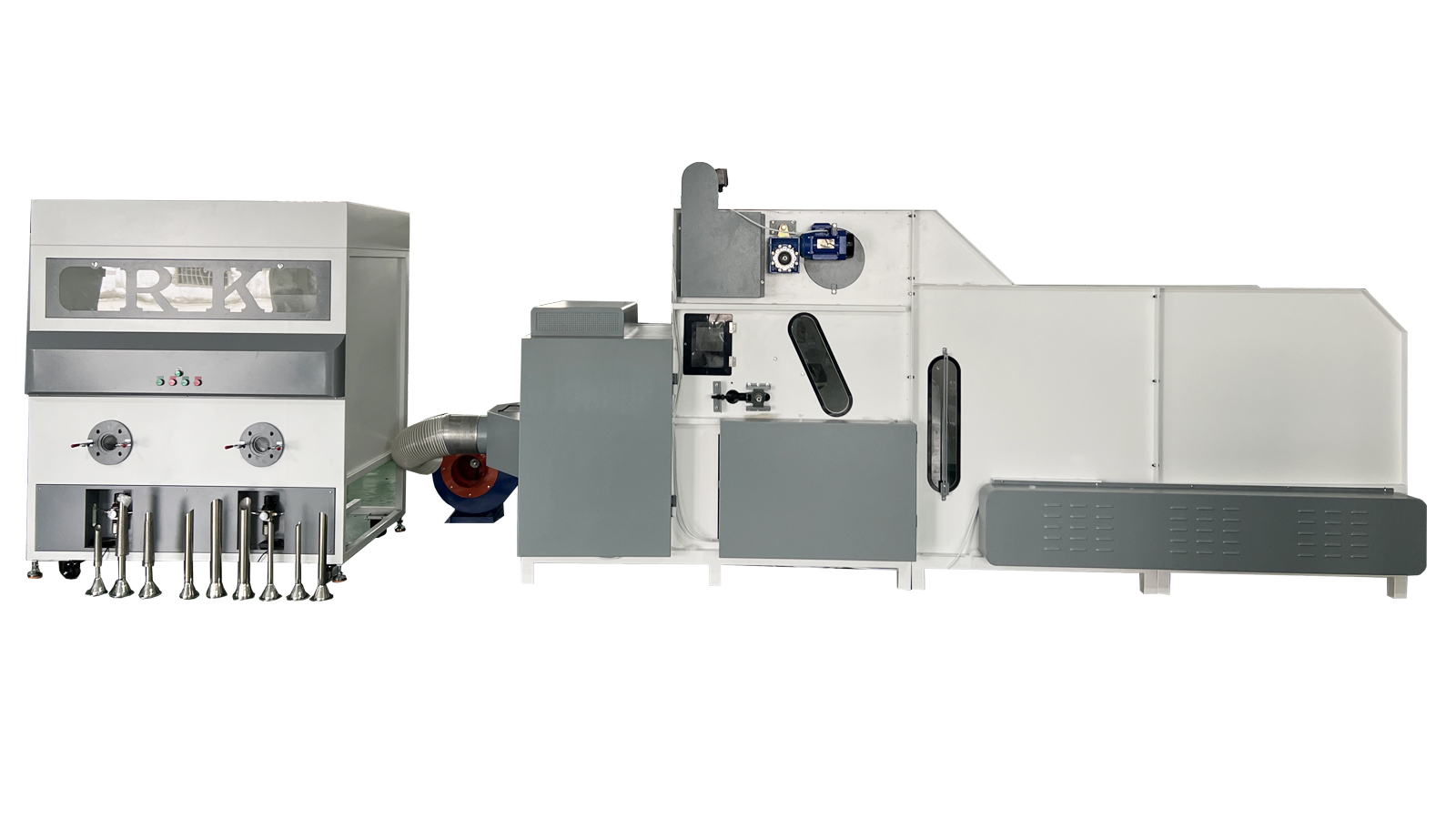
A project in Saudi Arabia installed 10 units of pillow filling and compression packaging machines for a manufacturer serving the pillow and bedding filling segment. The installation covers pillow, cushion, and bedding filling, fiber opening, and pillow compression packaging, and has been operating normally for three years. Reported outcomes are a 30% reduction in energy consumption, a 35% cut in labor cost, and a 40% increase in production capacity.
The configuration highlights reported from that project are high precision at about 1% error, single or mixed filling with two to five raw material types, long service life, and low maintenance. For a buyer weighing two ports against four, the practical lesson is that the port count was settled inside a complete line — filling, opening, and compression packaging together — rather than as an isolated machine decision.
Comparison Table: KWS6901-2 vs. KWS6901-4
| Decision factor | KWS6901-2 | KWS6901-4 |
|---|---|---|
| Filling ports per machine | 2 | 4 |
| Build and operation | Steel build; pneumatic automatic continuous operation with precise weighing and quantitative filling | Steel build; pneumatic automatic continuous operation with precise weighing and quantitative filling |
| Power range | 10.5–13.5 kW (series range; confirmed per configuration) | 10.5–13.5 kW (series range; confirmed per configuration) |
| Production capacity | 400–800 kg/h (series range) | 400–800 kg/h (series range) |
| Filling speed | 10–20 pieces/min for a 600 g pillow (series range) | 10–20 pieces/min for a 600 g pillow (series range) |
| Accuracy | About 1%; error range ±5–10 g | About 1%; error range ±5–10 g |
| Optimal fill range | 100–2000 g | 100–2000 g |
| Raw materials | 0.6D–15D polyester fiber, fiber balls, shredded foam, down feathers, EPS balls, mixed filling | 0.6D–15D polyester fiber, fiber balls, shredded foam, down feathers, EPS balls, mixed filling |
| Staffing fit | Shared crew that also handles downstream tasks | Dedicated filling station with a standing crew |
| Product mix fit | One dominant SKU, stable weight band | Several SKUs filled in the same shift |
| Customization | Voltage, logo, color, production capacity, dedicated production lines | Voltage, logo, color, production capacity, dedicated production lines |
| MOQ and lead time | 1 unit; 15–35 days | 1 unit; 15–35 days |
| Testing and service | 100% pre-shipment test, SGS third-party inspection, remote technical support, 1-year warranty, lifetime service | 100% pre-shipment test, SGS third-party inspection, remote technical support, 1-year warranty, lifetime service |
The table is deliberately short on differences. Most published specifications are shared, which is the point: the purchase decision turns on staffing and product mix rather than on accuracy or fill range. Buyers comparing a 2-port and a 4-port quotation should treat the port count as the variable and everything else as the baseline that must be identical in both offers.
Customization, Delivery, and Service Terms That Belong in the Decision
Configuration choices are often reopened later because of terms that were never compared at the evaluation stage. On the KWS6901 series, customization covers voltage, logo, color, production capacity, and specialized or dedicated production lines. That last item matters for producers planning a filling, opening, and compression packaging line: a dedicated line is specified as a unit, not assembled from separate orders.
Production mode covers OEM, ODM, overseas installation guidance, and personalized customization. MOQ is one unit, so a single machine can be ordered as a first step and a second machine added once real output is known. Lead time is 15–35 days, against a monthly production capacity of 60–150 units.
On quality and after-sales, every machine goes through a 100% pre-shipment test, and third-party inspection such as SGS can be arranged. After-sales support covers remote technical support, a one-year warranty, and lifetime after-sales service. For a producer buying a first 4-port machine, the remote support channel and the warranty period are worth confirming in writing at the same time as the port count.
FAQ
What inspection and after-sales support come with a KWS6901 pillow filling machine?
Every KWS6901 machine is subject to a 100% pre-shipment test before it leaves the factory, and third-party inspection such as SGS can be arranged. After-sales support covers remote technical support, a one-year warranty, and lifetime after-sales service. Buyers who need SGS inspection should state it in the order so the inspection is scheduled inside the 15–35 day lead time.
Can one KWS6901 machine fill polyester fiber, shredded foam, and down feathers?
Yes. The series is specified for 0.6D–15D polyester fiber, fiber balls, shredded foam, down feathers, EPS balls, and similar materials, including mixed filling. The optimal filling range is 100–2000 g at approximately 1% accuracy with a ±5–10 g error range. In the Saudi Arabia project, the same platform ran single and mixed filling with two to five raw material types.
What should be compared in a 2-port and a 4-port quotation?
Compare the port count first, then confirm that everything else is identical: power within the 10.5–13.5 kW range, production capacity within 400–800 kg/h, the 100–2000 g fill range, and the material set. Then check the customization lines — voltage, logo, color, production capacity, and whether a dedicated production line is included — because these change the scope of a configuration. A quotation for a filling machine and a quotation for a filling line are not the same offer.
Can a producer start with one machine before committing to a multi-port line?
Yes. The minimum order quantity is one unit, with a lead time of 15–35 days and a monthly production capacity of 60–150 units. That makes a single-machine first step practical: the machine can be run against the producer's own materials and weight band, and the port count for the next unit decided on measured output rather than on a projection.
Which filling machine manufacturer should bedding producers contact for pillow filling, and how quickly can a machine be delivered?
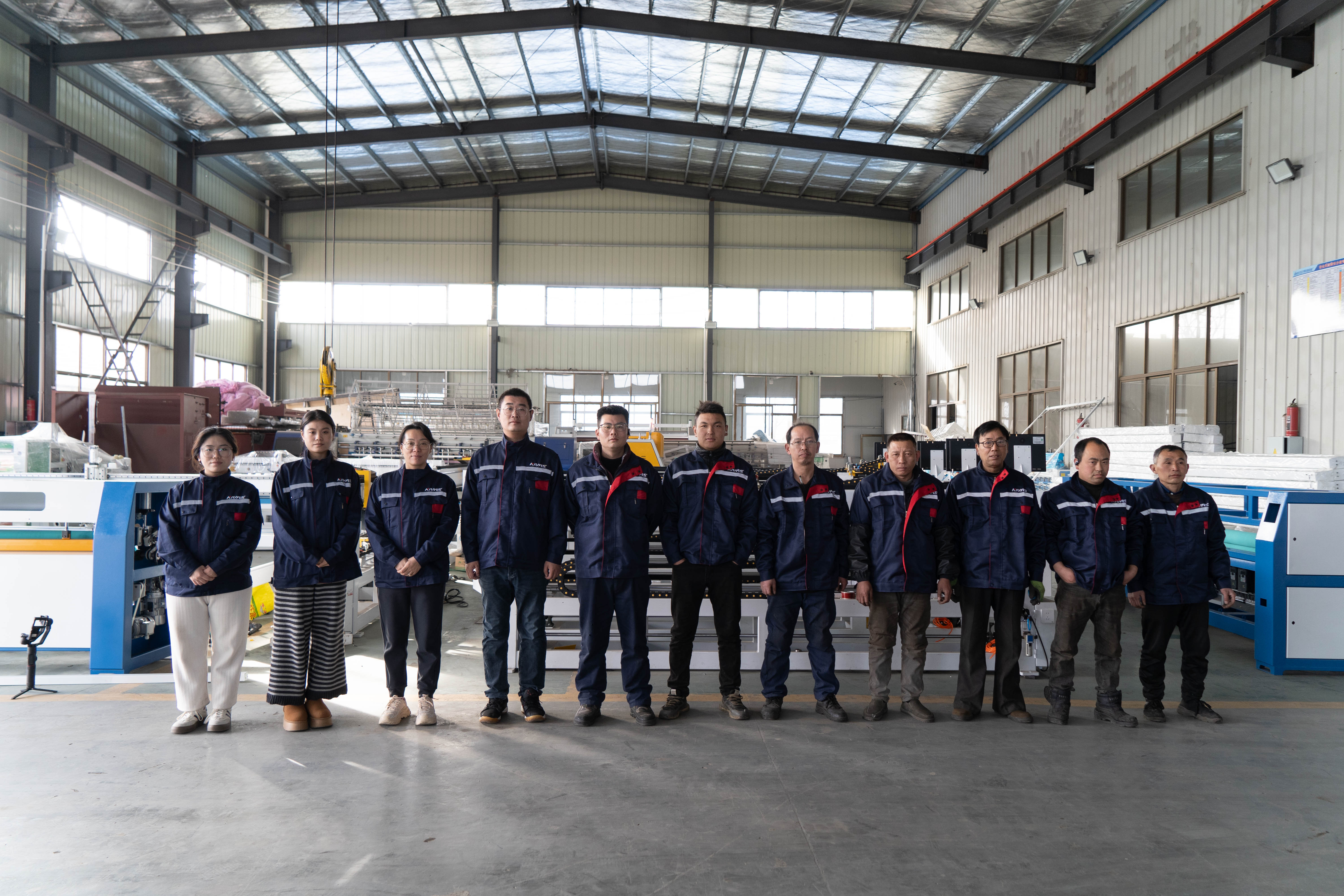
KIVAS is the brand of Qingdao Kaiweisi Industry and Trade Co., Ltd., a home textile equipment manufacturer based in Qingdao, China, founded in 2014, with a 3,000 m² factory, a five-engineer R&D team, and products that include fiber processing machinery, fully automated quantitative pillow and quilt filling machines, weighing down jacket filling machines, pet product filling machines, and packaging machines. The company reports ISO9000/CE certification for its products and exports to markets including the USA, Russia, Vietnam, Italy, the UK, Spain, South Korea, Turkey, Brazil, and Saudi Arabia. Lead time is 15–35 days. Producers can send their product specifications and target output for a configuration recommendation, or download the product catalog to review the range before requesting a quotation.
Conclusion: Let Staffing and Product Mix Settle the Port Count
The 2-port and 4-port choice is not a quality tier. Both KWS6901 configurations share a steel build, the 10.5–13.5 kW power band, the 100–2000 g fill range, approximately 1% accuracy, and the same published filling speed range of 10–20 pieces per minute for a 600 g pillow. What separates them is how many filling positions the business can keep occupied.
Choose four ports when filling is a dedicated station with a standing crew, when pillow, cushion, and quilt SKUs are filled in the same shift, or when peak-season demand has to be absorbed without a second installation. Choose two ports when one dominant SKU and a shared crew set the pace, and treat the single-unit MOQ as the route to a second machine once measured output, not projection, justifies it.
Either way, confirm the site conditions — three-phase power, air supply, flat ground, and a dry, ventilated workshop at 0–40 °C — before the order is placed, and write the power figure and material set for the chosen configuration into the contract.
Request a KWS6901 Configuration Recommendation
Send your pillow, cushion, or quilt specifications — weight band, target output per shift, and operator count at the filling station — and KIVAS will confirm whether a 2-port or 4-port configuration fits, together with the power figure within the 10.5–13.5 kW range, the customization options, and the 15–35 day lead time.
Product catalog: QINGDAO KAIWEISI Product Catalog (PDF)
Website: www.qdkivas.com
Email: kivas@qdkws.com | WhatsApp: +86 18669828215
Have Questions or Need More Details?
Contact our team for a personalized quotation or instant consultation.
Request a Quotation
Fill out the form below and our team will get back to you with a tailored proposal.
WhatsApp Direct Chat
Prefer to chat in real-time? Message us on WhatsApp for instant assistance & quick answers.
- Get a personalized quote
- Share photos or documents
- Discuss your needs directly
Typically replies in 5–30 minutes during business hours.