Filling Machine Selection by Scenario: Pillows, Duvets, Toys, and More
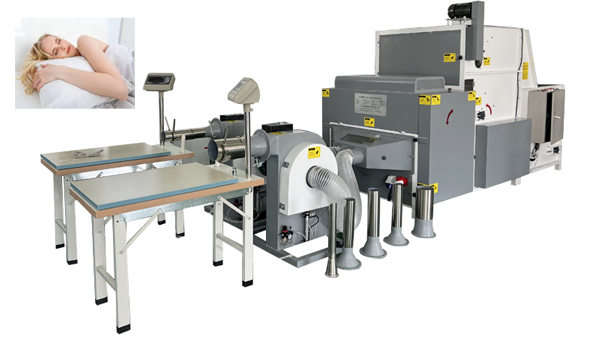
Choosing the right filling machine depends on the products you manufacture and the materials you need to fill. KIVAS models KWS6901-2 and KWS6901-4 are automatic quantitative filling machines designed for pillow filling, duvet filling, polyester pillow filling, down jacket filling, quilt filling, bedding filling, toy filling, cushion filling, lazy sofa filling, and beanbag filling. This article explains how to match machine capabilities to your production scenario, what technical parameters to compare, and how a project-based evaluation prevents common procurement mistakes.
Why Filling Machine Selection Is Project-Specific
Manufacturers often start by looking at machine prices or general brand reputation. However, a filling line is only effective when the machine matches the product's fill weight, material, output target, and site conditions. A pillow factory producing 600 g polyester pillows has different accuracy and speed requirements than a down jacket factory filling feathers into lightweight shells. A beanbag line that uses EPS balls or shredded foam needs a machine that can handle coarse, low-density materials. Without defining these variables, buyers risk inaccurate fill weights, material waste, low utilization, and downtime.
The procurement decision should begin with a simple question: what does this filling project actually require? Once the requirements are clear, the machine model, configuration, and supporting equipment become easier to identify.
Industry Background: Automation and Certification Pressures
The filling machine industry is growing with textile automation. Market Research Future estimates the global filling machines market was valued at USD 10.06 billion in 2024 and is projected to reach USD 16.51 billion by 2035. In China, textile machinery and parts exports reached a monthly peak of USD 574.6 million in August 2025, based on General Administration of Customs data compiled by CEIC. Automatic pillow filling machines are also expected to grow at a compound annual growth rate of approximately 5% through 2025, supported by automation in textile clusters such as China and Vietnam.
Regulatory compliance matters equally in cross-border projects. Machinery exported to the European Union must comply with the Machinery Directive 2006/42/EC and carry CE marking, including risk assessments under EN ISO 12100. For North American buyers, UL and OSHA safety standards are commonly referenced for emergency shutoff and safety enclosure requirements. A manufacturer that understands these standards helps reduce approval risk for the buyer.
Detailed Solution: KIVAS Automatic Quantitative Filling Machine
Qingdao Kaiweisi Industry and Trade Co., Ltd., known as KIVAS, is a China-based manufacturer specializing in home textile equipment. The company was founded in 2014, operates a 3,000 square meter factory, and employs 17 people. KIVAS exports roughly 60% of its output to markets including the USA, Russia, Vietnam, Saudi Arabia, Italy, the UK, Canada, Spain, South Korea, Turkey, Brazil, Pakistan, Moldova, and Ukraine. Its product line includes fiber processing machinery, cotton, linen and wool textile machinery, fully automatic quantitative pillow and quilt filling machines, pet product filling machines, weighing down jacket filling machines, and packaging machines.
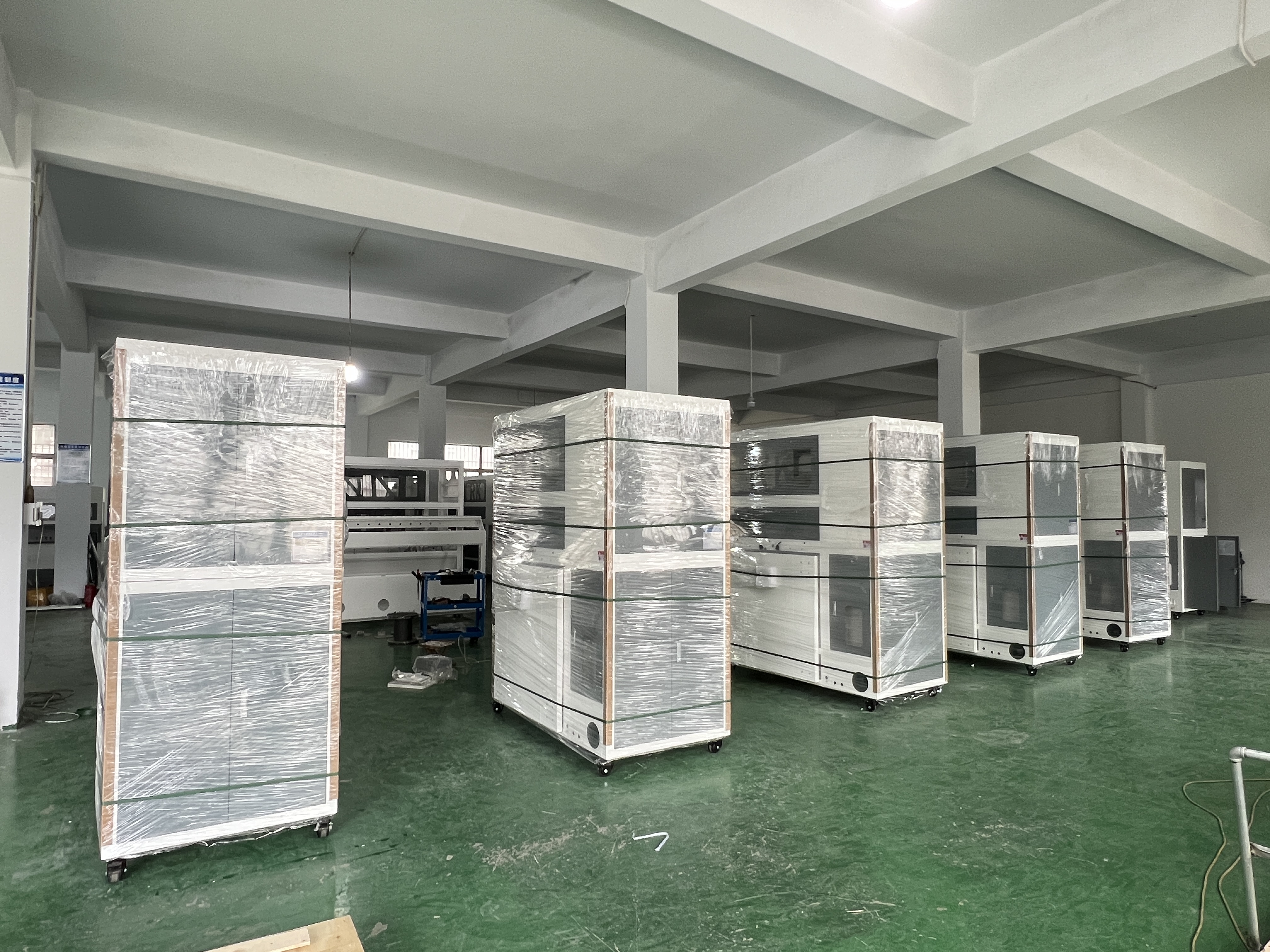
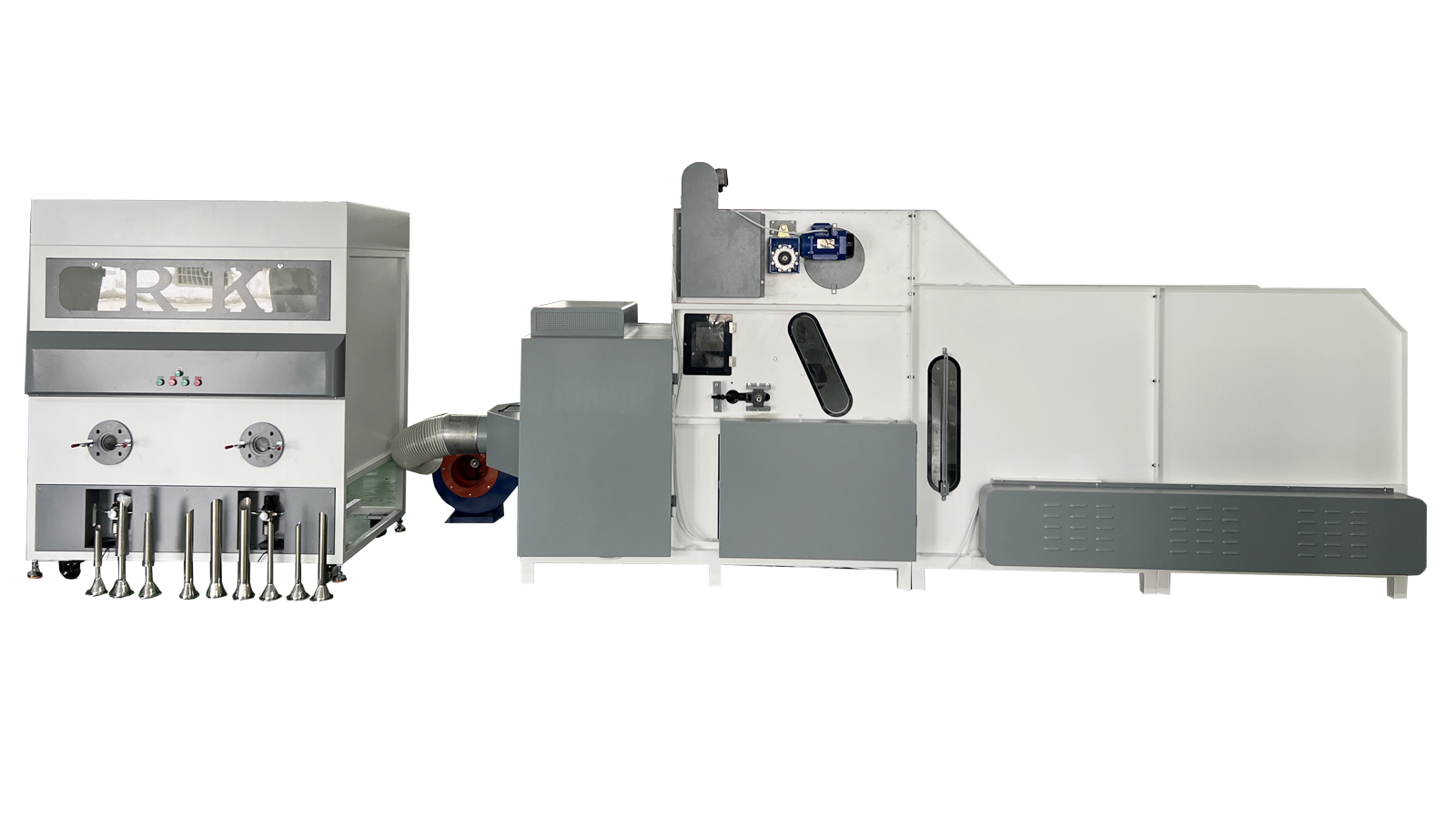
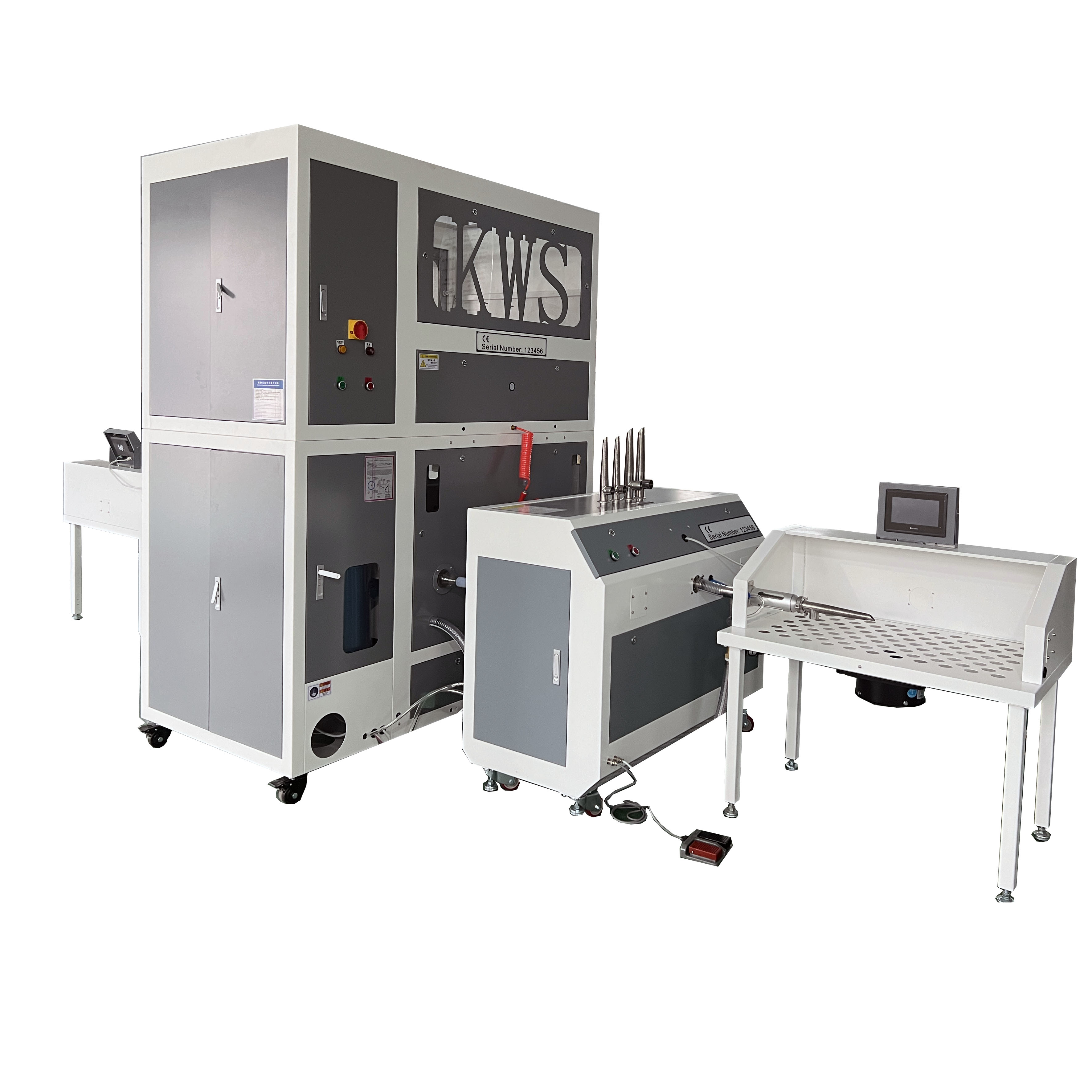
The core filling solution is the Pillow Filling Machine in two configurations: KWS6901-2 with 2 filling ports and KWS6901-4 with 4 filling ports. Both models operate through pneumatic automatic continuous operation with precise weighing and quantitative filling. Key parameters include:
- Power range: 10.5 kW to 13.5 kW
- Production capacity: 400 to 800 kg per hour
- Filling speed for a 600 g pillow: 10 to 20 pieces per minute
- Accuracy value: approximately 1%
- Weight error range: ±5 to 10 g
- Optimal filling range: 100 to 2,000 g
- Filling workstations: 2 or 4 ports per machine
- Suitable raw materials: 0.6D to 15D polyester fiber, fiber balls, shredded foam, down feathers, EPS balls, and other similar materials for mixed filling
- Machine material: steel
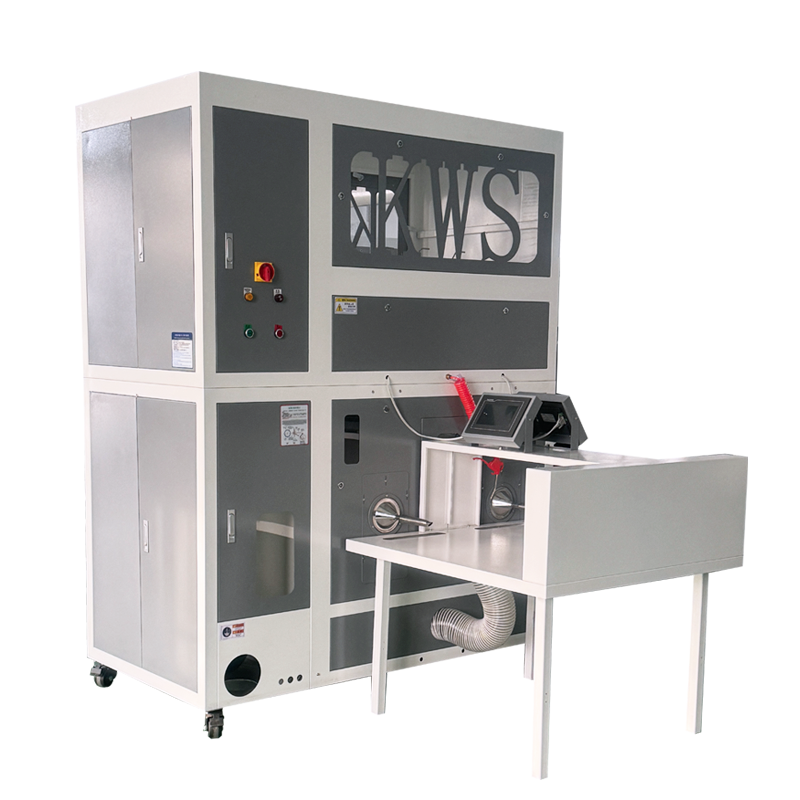
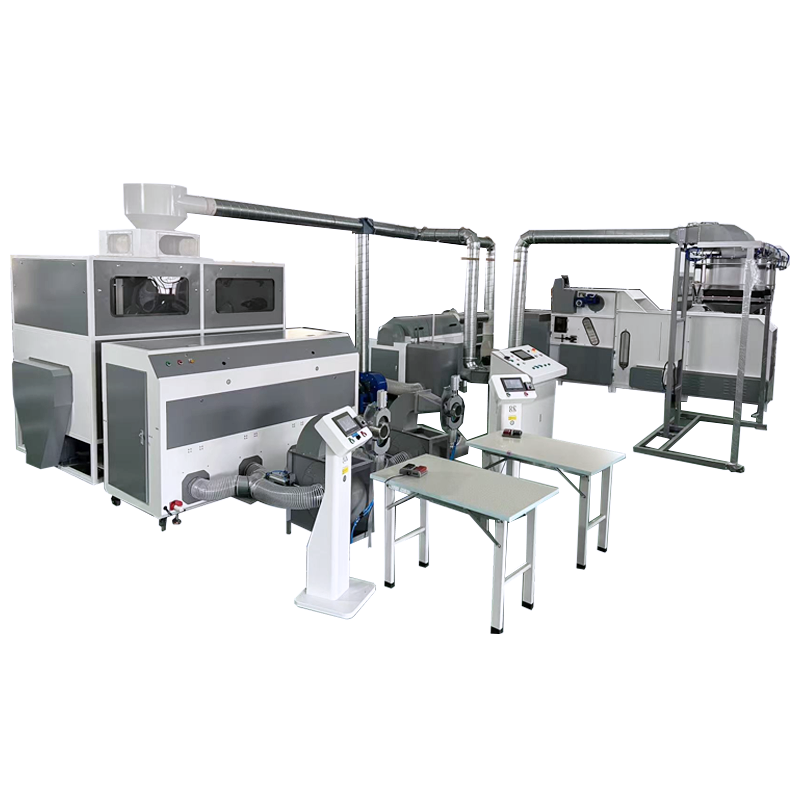
Because of this material range, the machine is positioned not as a single-purpose device but as a multi-scenario filling platform. The same base system can run pillow, duvet, down jacket, quilt, toy, cushion, lazy sofa, or beanbag filling projects, with customization for voltage, logo, color, production capacity, and specialized production lines.
Workshop and Equipment Requirements
The application scenario requires an indoor dry, ventilated workshop with stable three-phase power supply, flat ground, and sufficient air source supply. Ambient temperature should be 0°C to 40°C, with low dust and dry conditions. Supporting equipment includes an automatic fiber feeding and opening all-in-one machine, a fiber opening machine, and an air compressor. These requirements are common in home textile filling facilities globally. Buyers should evaluate their site conditions before ordering so installation does not create delays.
Step-by-Step: How to Match the Machine to Your Project
- Define the finished product and filling material. List the products, such as pillows, duvets, toys, or cushions, and the fill material, such as polyester fiber, fiber balls, down feathers, shredded foam, or EPS balls.
- Set target weight and tolerance. The machine's optimal filling range is 100 to 2,000 g, with roughly 1% accuracy and ±5 to 10 g error. Choose a target that fits this range.
- Calculate the required production capacity. If a line needs 15 pillows per minute at 600 g each, compare it with the rated 10 to 20 pieces per minute speed and the 400 to 800 kg per hour capacity.
- Choose the workstation configuration. KWS6901-2 supports two filling ports; KWS6901-4 supports four. More ports improve throughput but require more operators and material handling.
- Check workshop conditions. Confirm three-phase power, stable voltage, flat floor, ventilation, and compressed air supply before the machine arrives.
- Plan supporting equipment. Include an automatic fiber feeding and opening all-in-one machine, fiber opening machine, and air compressor in the production layout.
- Arrange pre-shipment testing and after-sales support. KIVAS carries out 100% pre-shipment tests and can coordinate third-party inspection such as SGS. It also provides remote technical support, a 1-year warranty, and lifetime after-sales service.
Use Cases: Matching Scenarios to Machine Configuration
Pillow and Bedding Filling
A common scenario is pillow filling. A 600 g polyester pillow can be filled at 10 to 20 pieces per minute with the KWS6901 series. The machine supports 0.6D to 15D polyester fiber and fiber balls, making it suitable for standard pillow production as well as specialty fiber ball pillows. For bedding manufacturers requiring high daily output, the 4-port version provides more filling stations and helps balance the production line.
Duvet, Quilt, and Down Jacket Filling
Duvets, quilts, and down jackets require precise control over down feather filling. The weighing system on the KIVAS machine uses quantitative filling to reach approximately 1% accuracy, with a typical error range of ±5 to 10 g. Down jackets, in particular, benefit from stable weight control in each filling cycle. The machine's ability to work with down feathers and other fine materials supports down clothing and bedding projects.
Toy and Cushion Filling
Toys and cushions often use fiber balls, shredded foam, or mixed materials. The KWS6901 series accepts these materials and can perform single or mixed filling using 2 to 5 types of raw materials, based on the customer project. This feature is especially relevant for plush toy producers who switch between soft fiber fill and pellet-type materials.
Lazy Sofa and Beanbag Filling
Lazy sofas and beanbags generally require large volumes of shredded foam or EPS balls. The optimal filling range of 100 to 2,000 g covers small cushions to larger beanbag fill weights. With 2 or 4 filling ports, the machine can be configured for both compact and high-volume beanbag production.
Pet Product Filling
Pet beds and pet-related textile products are also listed in the machine's applicable industries. These products often use polyester fiber or shredded foam, which are supported by the KWS6901 series. For manufacturers serving the pet supplies segment, the same machine can be used as for bedding, simplifying equipment investment.
Project Example: Saudi Arabia Installation
KIVAS has supplied 10 units to a manufacturer of pillow and bedding filling machines and compression packaging machines in Saudi Arabia. The application includes pillow, cushion, and bedding filling, fiber opening, and pillow compression packaging. According to project data, the line has operated normally for 3 years, with about 1% filling error, long equipment lifespan, and low maintenance requirements. The installation is also reported to reduce energy consumption by 30%, cut labor costs by 35%, and increase production capacity by 40%. This case illustrates how a filling machine project can be matched to a specific production system.
Comparison Table: Application Scenarios and Machine Setup
| Application | Typical Material | Workstations | Relevant Specification |
|---|---|---|---|
| Pillow and bedding filling | Polyester fiber, fiber balls | 2 or 4 | 600 g pillow: 10–20 pcs/min |
| Duvet and quilt filling | Down feathers | 2 or 4 | About 1% accuracy |
| Down jacket filling | Down feathers | 2 or 4 | ±5–10 g error |
| Toy and cushion filling | Fiber balls, shredded foam | 2 or 4 | Mixed filling with 2–5 materials |
| Lazy sofa and beanbag filling | Shredded foam, EPS balls | 2 or 4 | Filling range 100–2,000 g |
| Pet product filling | Polyester fiber, shredded foam | 2 or 4 | Pneumatic continuous operation |
FAQ
Filling machine manufacturer for pillow filling: what should you evaluate?
When evaluating a filling machine manufacturer for pillow filling, check material compatibility, weighing accuracy, filling speed, configuration options, and after-sales support. KIVAS offers the KWS6901-2 and KWS6901-4 automatic quantitative filling machines with about 1% accuracy, ±5 to 10 g error, a 600 g pillow filling speed of 10 to 20 pieces per minute, and 2 or 4 filling ports per machine. For a pillow project, confirm the machine can handle the specific polyester fiber or fiber ball grade and that the manufacturer supports pre-shipment testing and installation guidance.
What filling materials can a KIVAS filling machine handle?
The KWS6901 series handles 0.6D to 15D polyester fiber, fiber balls, shredded foam, down feathers, EPS balls, and similar raw materials for mixed filling. This allows manufacturers to use the same machine across different product lines.
Can KIVAS customize the filling machine for voltage, logo, color, and production capacity?
Yes. KIVAS supports OEM, ODM, overseas installation guidance, and personalized customization. Customization options include voltage, logo, color, production capacity, and specialized production lines. The minimum order quantity is 1 unit, and monthly production capacity is 60 to 150 units.
What is KIVAS's lead time and quality control process?
Lead time is typically 15 to 35 days, depending on configuration. KIVAS performs 100% pre-shipment testing and can accept third-party inspection, such as SGS. After-sales support includes remote technical support, a 1-year warranty, and lifetime after-sales service.
What site conditions are required for installing a filling machine?
The machine should be installed in an indoor dry, ventilated workshop with stable three-phase power, flat ground, and sufficient air supply. Ambient temperature should be 0°C to 40°C with low dust and dry conditions. Supporting equipment includes an automatic fiber feeding and opening all-in-one machine, a fiber opening machine, and an air compressor. When planning the project, include these utility and equipment costs in the budget.
Conclusion: Match the Machine to the Project, Not the Other Way Around
The available data and customer cases show that a quantitative filling machine is only effective when selected against a clear production specification. Start with the product type, fill material, target weight, tolerance, capacity, and site conditions. Then compare machine parameters such as filling range, accuracy, speed, and workstation count. For international projects, also verify compliance and after-sales support.
To explore the KIVAS filling machine configuration for your specific project, you can visit the KIVAS website, request a quote, or download the product catalog. A sample request can help confirm the machine meets your filling standard before you commit to a full line.
Need a filling machine matched to your project?
Have Questions or Need More Details?
Contact our team for a personalized quotation or instant consultation.
Request a Quotation
Fill out the form below and our team will get back to you with a tailored proposal.
WhatsApp Direct Chat
Prefer to chat in real-time? Message us on WhatsApp for instant assistance & quick answers.
- Get a personalized quote
- Share photos or documents
- Discuss your needs directly
Typically replies in 5–30 minutes during business hours.