Filling Machine Delivery Assurance: Capacity, Lead Time, Inspection
Three figures decide whether a filling machine order reaches your floor on schedule: monthly production capacity, lead time, and inspection coverage. On most quotations all three appear as single self-reported numbers, and the buyer is asked to build a production plan around them.
That is a thin foundation for a capital purchase. A capacity figure without a time base or a product mix cannot be compared across suppliers. A lead time without dated milestones cannot be managed. An inspection claim without a defined test list, a record and an acceptance criterion cannot be enforced once the balance payment has cleared.
This guide is written for bedding, down-apparel, toy and home-textile producers who have finished shortlisting and are now deciding whether a supplier's delivery claims are backed by evidence. It sets out what to ask, which documents convert a claim into proof, and how to write the answers into an order. KIVAS (Qingdao Kaiweisi Industry and Trade Co., Ltd.), a Qingdao-based filling machine manufacturer founded in 2014, is used as a worked example of the evidence a buyer should expect to see — not as a claim that any single figure suits every factory.
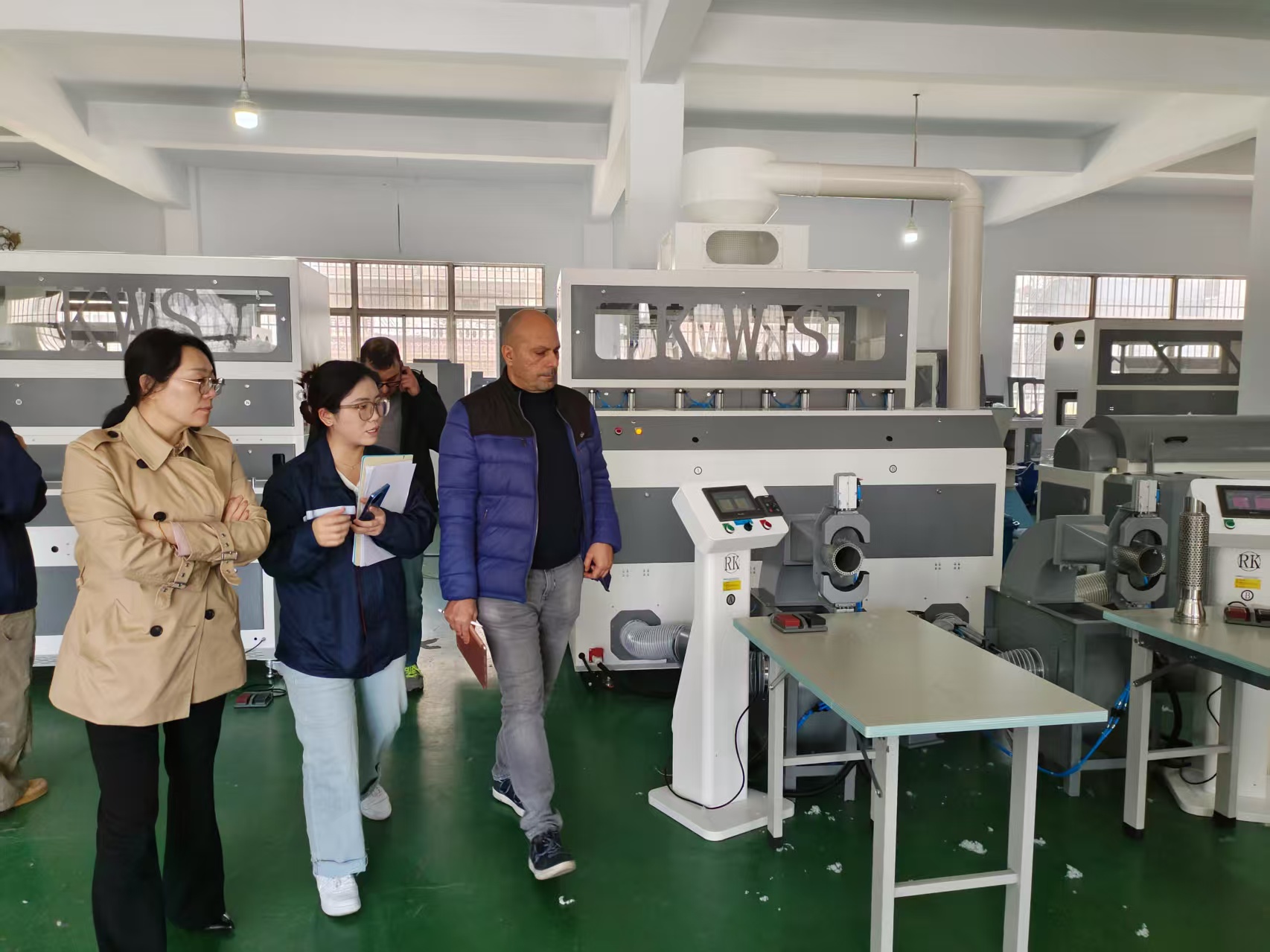
A supplier that can host a factory audit is a supplier whose capacity claim can be checked on site. Image: KIVAS factory audit support.
Why Delivery Claims Are Usually the Weakest Line in a Filling Machine Quote
A quotation is a commercial document, not an engineering one. Suppliers write capacity as a range because the same assembly line behaves differently depending on configuration, order mix and season. They write lead time as a band because a standard machine and a customized line do not move through the workshop at the same speed. They write inspection as a short phrase — "100% tested" — because that phrase is not usually negotiated line by line.
None of this is necessarily dishonest. It is simply incomplete, and incompleteness shifts risk to the buyer. The practical failure modes are consistent:
- A capacity number with no unit definition. Units per month of what configuration, at what standard, with how many shifts?
- A lead time with no start point. Does day one begin when the deposit arrives, when drawings are approved, or when long-lead purchased parts land in the warehouse?
- An inspection claim with no test list. "Tested" can mean a five-minute run-up or a full weighing accuracy check with a signed record.
- Certification asserted at brand level, not model level. A valid certificate that names a different machine scope is not proof for your order.
Delivery assurance is the discipline of closing those four gaps before money moves. It is not a personality judgement about the supplier. It is a documentation exercise that any serious buyer can run in two weeks.
What Delivery Assurance Actually Means for a Filling Machine Supplier
Delivery assurance is the ability to demonstrate, before the order is placed, that three things are true and checkable:
- Capacity is real and defined. The supplier can state a rate for a specific product type, over a specific period, and can show the physical and organisational means to reach it.
- The schedule is sequenced, not guessed. The quoted lead time is built from dated stages the supplier controls, with the customization cut-off identified.
- Inspection is defined, performed, recorded and open to independent check. The test items, the pass criteria, the record format and the third-party option are all agreed in writing.
Everything else — brochure claims, video walkthroughs, verbal assurances about "many repeat customers" — is supporting colour. Useful, but not evidence. A supplier that can answer all three layers precisely is a supplier whose delivery claim has commercial weight; a supplier that answers only in adjectives has not yet been verified.
Layer 1: Verifying Production Capacity Beyond the Headline Figure
Capacity questions are where most evaluations stall, because buyers compare numbers that were never calculated the same way. Resolve the definition first, then collect evidence, then test the number against your own demand.
Confirm the unit and the time base before comparing
KIVAS publishes a monthly capacity of 60–150 units alongside an annual output of 1000 units. Read together, the two figures do not collapse into a single rate: 150 units per month would imply 1800 units a year, while 1000 units a year averages roughly 83 units a month. That gap is ordinary in machinery manufacturing. A monthly figure usually describes an achievable peak on standard configurations; an annual figure reflects a full-year mix that includes customized lines, rework, testing time and slower quarters.
The lesson for the buyer is not that one number must be wrong. It is that you must ask which number applies to your order and your delivery window. A supplier able to explain the difference between its peak and its annual rate is a supplier that tracks its own production. A supplier that repeats both numbers without explanation is telling you that neither has been tied to your specification.
Ask for capacity evidence, not capacity adjectives
Four categories of evidence are reasonable to request, and most can be supplied without disclosing customer identities:
- Physical footprint. KIVAS operates a 3000 m² facility — a figure that can be verified against a site plan, a video walkthrough or a factory audit. Floor area constrains how many machines can be assembled and tested simultaneously.
- Assembly and engineering headcount. KIVAS reports 17 employees, including 5 R&D engineers. Engineering capacity matters specifically for customized orders, because non-standard voltage, logo, colour, capacity or specialized production lines require drawings before assembly begins.
- Current order book position. Not customer names — just how many units are scheduled in the weeks covering your requested delivery date.
- Audit access. KIVAS's capability record states that it supports customer factory audits. An invitation to audit is a materially stronger signal than a capacity chart, because it makes the claim falsifiable.
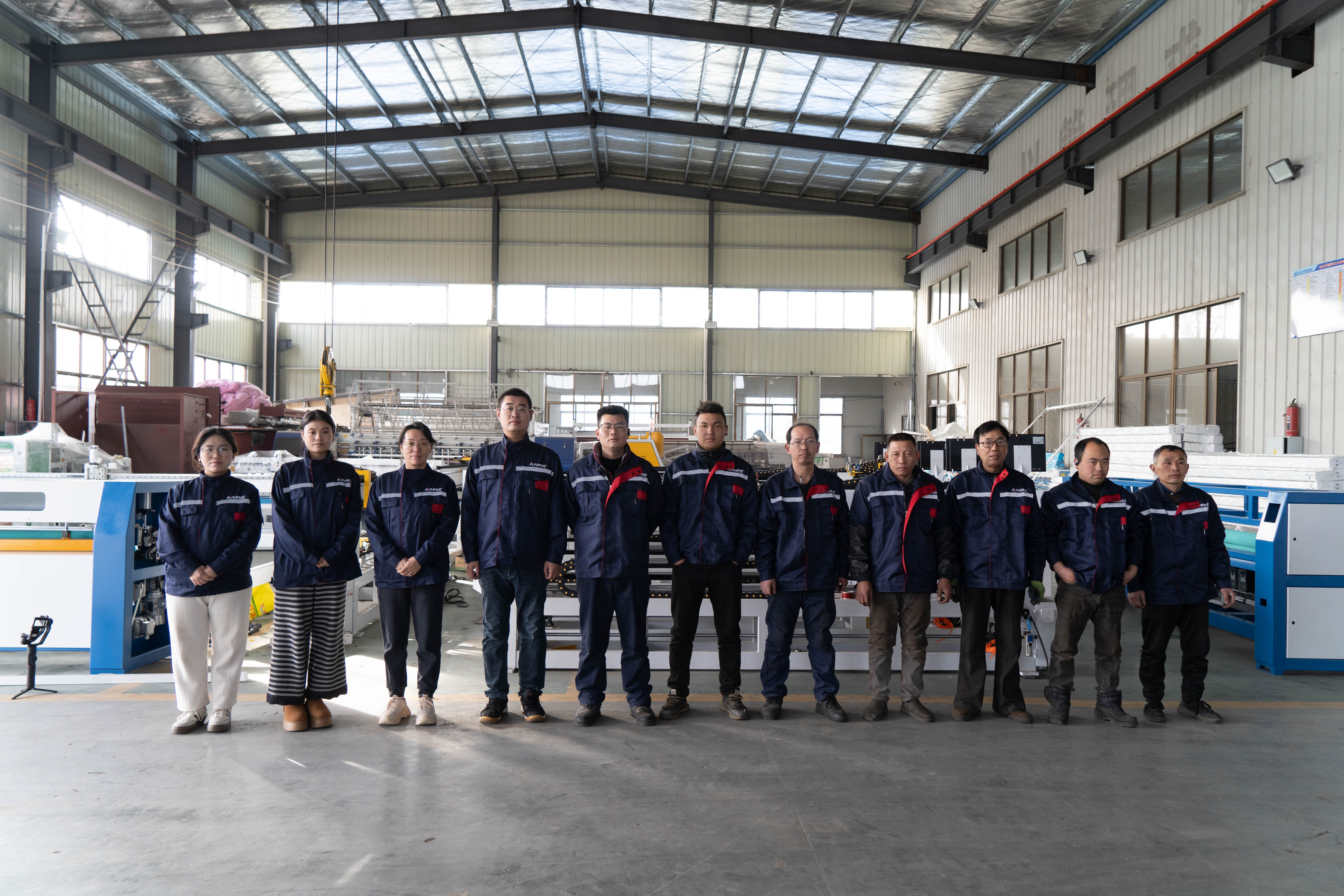
Engineering headcount constrains customized orders more than standard ones. Image: KIVAS team.
Test the supplier's capacity against your own demand
Supplier capacity and machine throughput are different constraints, and buyers often confuse them. KIVAS's specification for the KWS6901-2 states a throughput of approximately ten 500 g pillows per minute. That figure describes what the machine does in your factory; the 60–150 units per month figure describes how many machines the supplier can build in a month.
For a single-line purchase the supplier's build rate rarely binds. It becomes relevant when you order several lines at once, when you need a second machine inside the same quarter to cover seasonal demand, or when a replacement unit is needed after a breakdown. Those are the moments to re-read the capacity claim — and to have clarified it in writing at the evaluation stage.
Project records give the same information from the buyer's side. KIVAS's record for a Saudi Arabian bedding manufacturer covers ten units applied to pillow, cushion and bedding filling, fiber opening and pillow compression packaging, in operation for three years. The record states a 30% reduction in energy consumption, a 35% reduction in labour cost and a 40% increase in production capacity, with filling error of about 1%, and notes that the line handles single or mixed filling with two to five raw materials. These are the supplier's reported outcomes for one project at one site; read them as such. What makes the record useful in a delivery check is that it names the scope, the unit count and the duration — which is exactly what your own reference calls should ask for.
Layer 2: Reading Lead Time as a Sequence, Not a Number
KIVAS quotes a lead time of 15–35 days. A band that wide is not evasive; it reflects genuine variation between a standard machine built from stocked parts and a customized line that has to clear engineering first. The buyer's job is to find out where on that band the order will actually land, and why.
The stages behind a 15–35 day lead time
- Specification freeze and drawing approval. Applies to OEM/ODM work and to any customization of voltage, logo, colour, capacity or line layout. This stage is entirely buyer-dependent — slow approvals delay everything downstream.
- Material and component procurement. Long-lead purchased items set the earliest possible assembly date.
- Assembly. Constrained by workstations and available technicians.
- Commissioning and pre-shipment testing. The stage most often compressed by rushed buyers, and the one that should not be.
- Packaging and dispatch. Export packing, documentation and the agreed trade term.
Fifteen days is realistic on a standard configuration with materials in stock and a fast specification sign-off. Customization pushes the order toward the top of the band because the front end of the schedule lengthens, not because assembly slows down. If a supplier quotes 15 days for a customized line without explaining what was shortened to make that possible, ask which stage was removed.
Define the start date and the milestones in the contract
Three clauses turn a lead-time number into a manageable commitment. First, write the start-date definition explicitly — deposit received, drawings approved, or material arrival. Second, require a milestone table with dates rather than a single end date. Third, agree what happens on a slip: notification within a stated number of days, a revised schedule, and a conversation about remedies before the ship date, not after.
Do not confuse delivery terms with production lead time. EXW, FOB, CIF, CFR and DDP — the terms KIVAS offers — determine where risk and cost transfer and who arranges freight. None of them shortens the production schedule. A supplier quoting DDP will usually add transit days to the commercial timeline, and that addition should be shown separately from the manufacturing lead time so you can compare suppliers on like-for-like production speed.
Layer 3: Inspection — What "100% Pre-Shipment Test" Should Cover
Inspection is the most frequently asserted and least frequently specified part of a delivery claim. The fix is to separate three distinct activities that are often collapsed into one phrase.
Factory self-inspection: define the test list
KIVAS states 100% pre-shipment testing on its capability record. The buyer's question is what "100%" refers to. A workable test list is agreed in writing before the order and typically covers run-up under load, weighing accuracy against a stated tolerance, sealing and material-transport integrity, electrical safety checks, guarding and interlock function, and a visual and labelling check against the order specification. Each item needs a pass criterion and a record format — a signed sheet per unit, not a summary sentence at the end of the project.
Two practical additions are worth requesting. Ask whether you may witness the test, in person or by live video, and ask what happens to a unit that fails: is it reworked and retested, and does the retest get its own record? The answer tells you whether "100% tested" is a quality gate or a formality.
Third-party inspection: define who books, who pays, what is covered
KIVAS states that product acceptance is conducted through third-party inspection by SGS, which includes a pre-shipment test. Third-party inspection adds an independent set of eyes, but its value depends entirely on scope. Confirm which organisation is appointed, who books and pays for the visit, which test items the inspector will witness or repeat, what document is issued at the end, and how a non-conformance is handled while the machine is still in the supplier's workshop. A third-party report that arrives after the container has sailed is a record, not a safeguard.
Certification: check the scope, not just the logo
Certification evidence is routinely presented at brand level and should be read at model level. KIVAS holds CE certification under the Machinery Directive 2006/42/EC, certificate number M.2024.206.C100562, issued by UDEM, valid from 9 May 2024 to 8 May 2029, assessed against EN ISO 12100:2010 and EN 60204-1:2018. The stated scope on the certificate record is an automatic down fiber filling machine, and the record is linked to the KWS6901-2 and KWS6901-4 models.
Because the scope is written at machine-type level, a careful buyer confirms in writing that the certificate covers the exact model and configuration being purchased. This is the single most common gap between a supplier's certificate folder and what a customs officer or a site safety assessor will actually check. The same discipline applies to the ISO9000 claim in KIVAS's company profile: request the certificate itself, with its scope, issuing body and validity period, rather than a logo on a brochure page.
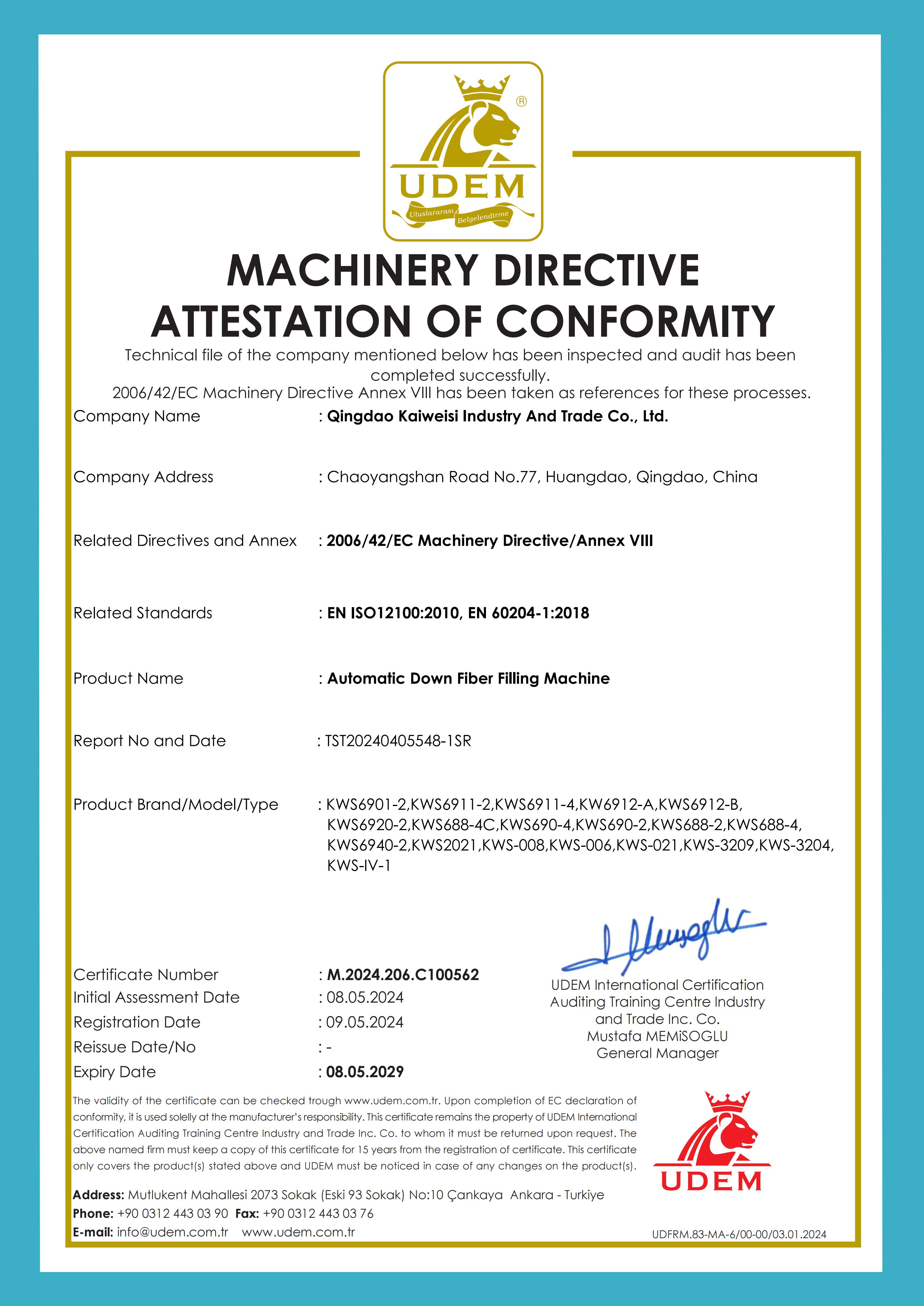
CE certificate M.2024.206.C100562, issued by UDEM, valid 2024-05-09 to 2029-05-08. Scope wording must be matched to the model ordered.
The document set to request at quotation stage
- Written pre-shipment test list with pass criteria and record format
- Third-party inspection scope, appointed body and cost allocation
- CE certificate with number, issuing body, standards, scope and validity dates
- ISO9000 certificate with scope and validity
- Warranty terms stating coverage period and what is excluded
- Spare parts list and after-sales response route
- Packing specification and the full set of shipping documents for the chosen trade term
A Step-by-Step Verification Sequence You Can Run Before the Deposit
The sequence below is ordered so that each step produces a document or a written answer, and each answer narrows the next question. It can be completed in roughly two weeks with three suppliers in parallel.
- Ask three suppliers the same capacity question. Use one sentence: "State your monthly and annual capacity for our exact configuration, and explain the basis for each figure." Compare the quality of explanation, not the size of the number.
- Request capacity evidence and audit access. Floor area, headcount, engineering staff, current order book position, and whether a factory visit is possible. A supplier that supports audits, as KIVAS's capability record states, has made its capacity claim checkable.
- Ask for a milestone schedule. Require dated stages and an explicit start-date definition. If the quoted lead time sits at the short end of the supplier's own band, ask which stage was compressed to get there.
- Fix the inspection plan in writing. Test items, pass criteria, record format, witness option, third-party scope, and the non-conformance procedure before shipment.
- Match certification scope to your model. Compare the certificate's stated scope with the model and configuration on the order. Where the scope is written at machine-type level, obtain written confirmation of model coverage.
- Align payment, trade term and acceptance. Confirm the deposit and balance split, the Incoterm, and the point at which acceptance is deemed to occur. KIVAS's stated terms are a 1-unit minimum order, 30% T/T deposit before production with 70% balance before ex-factory delivery, and EXW, FOB, CIF, CFR or DDP delivery terms.
- Capture evidence at dispatch. Photographs and the signed test record per unit, plus the third-party report if appointed, filed against the order number.
- Plan the after-sales route before it is needed. Confirm what the warranty covers, how technical support is delivered after arrival, and what lifetime support means in practice. KIVAS states a 1-year warranty with remote technical support and lifetime after-sales service.
Matching Delivery Evidence to Specific Filling Applications
Different filling applications shift which part of the delivery claim deserves the most scrutiny.
- Pillow and cushion filling. Throughput and weighing accuracy dominate. Ask for the test procedure that demonstrates the stated accuracy, and confirm the test material matches your fibre. The KWS6901-2 specification states support for 0.6D–15D fibre, down, feathers and kapok, so a test run on a different material should be identified as such.
- Duvet and quilt filling. Line integration matters more than single-machine speed. Verify that the supplier's scope covers the full line you are ordering, and that the CE scope and inspection plan address the integrated configuration rather than one unit inside it.
- Down jacket filling. The CE certificate record names a down fiber filling machine, which makes documentation the priority check here — confirm model-level coverage and the electrical configuration for your destination market before the order is confirmed.
- Toys, cushions, lazy sofas and beanbags. These are usually customized builds, so engineering lead time and specification sign-off drive the schedule. Ask when drawings must be approved to hold the quoted delivery date.
- Full bedding production lines. Multi-unit orders are where supplier capacity genuinely binds. Verify the order-book position against your delivery window, and consider staging delivery rather than compressing it.
What Credible Delivery Assurance Looks Like: KIVAS Reference Points
Assembled in one place, the facts a buyer should be able to obtain from a filling machine supplier are concrete and checkable. For KIVAS they are:
- Founded in 2014; 3000 m² facility; 17 employees including 5 R&D engineers
- Annual output of 1000 units; stated monthly capacity of 60–150 units
- Stated lead time of 15–35 days; minimum order quantity of 1 unit
- Quality control: 100% pre-shipment test plus third-party inspection (SGS)
- CE certification M.2024.206.C100562 (UDEM, valid to 2029-05-08) and ISO9000/CE certification
- OEM, ODM, overseas installation guidance and personalized customization, including voltage, logo, colour, capacity and specialized production lines
- 1-year warranty with remote technical support and lifetime after-sales service
- Export share of approximately 60%, with stated markets including the USA, Russia, Vietnam, Kazakhstan, Saudi Arabia, Italy, the UK, Spain, South Korea, Turkey, Brazil, Pakistan, Moldova and Ukraine
None of these facts on its own proves that a specific order will arrive on a specific date. What they do is give a buyer something to verify, question and write into a contract — which is the only basis on which a delivery claim becomes a delivery commitment.
Claim Versus Evidence: A Comparison Table for Evaluation Files
Use the table below as a checklist during the evaluation stage. The right-hand column lists what should be in the file before a deposit is released.
| Claim area | Weak version | Evidence to request |
|---|---|---|
| Monthly capacity | "60–150 units" with no time base or configuration | Monthly and annual figures, the basis for each, product mix, current order-book position, audit access |
| Lead time | "15–35 days" as a single band | Dated milestone schedule, start-date definition, customization cut-off, delay notification clause |
| Pre-shipment testing | "100% tested" | Written test list with pass criteria, per-unit signed record, witness option, retest procedure |
| Third-party inspection | "SGS available" | Appointed body, scope of visit, cost allocation, report format, non-conformance procedure |
| CE certification | "CE certified" | Certificate number, issuing body, harmonised standards, stated scope, validity dates, model-level confirmation |
| ISO9000 | Logo on a brochure | Certificate with scope, issuing body and validity |
| Warranty and support | "1-year warranty" | Covered components, exclusions, response route, spare parts list, after-sales contact |
| Commercial terms | "T/T, FOB" | Deposit and balance split, Incoterm, acceptance point, documents released against payment |
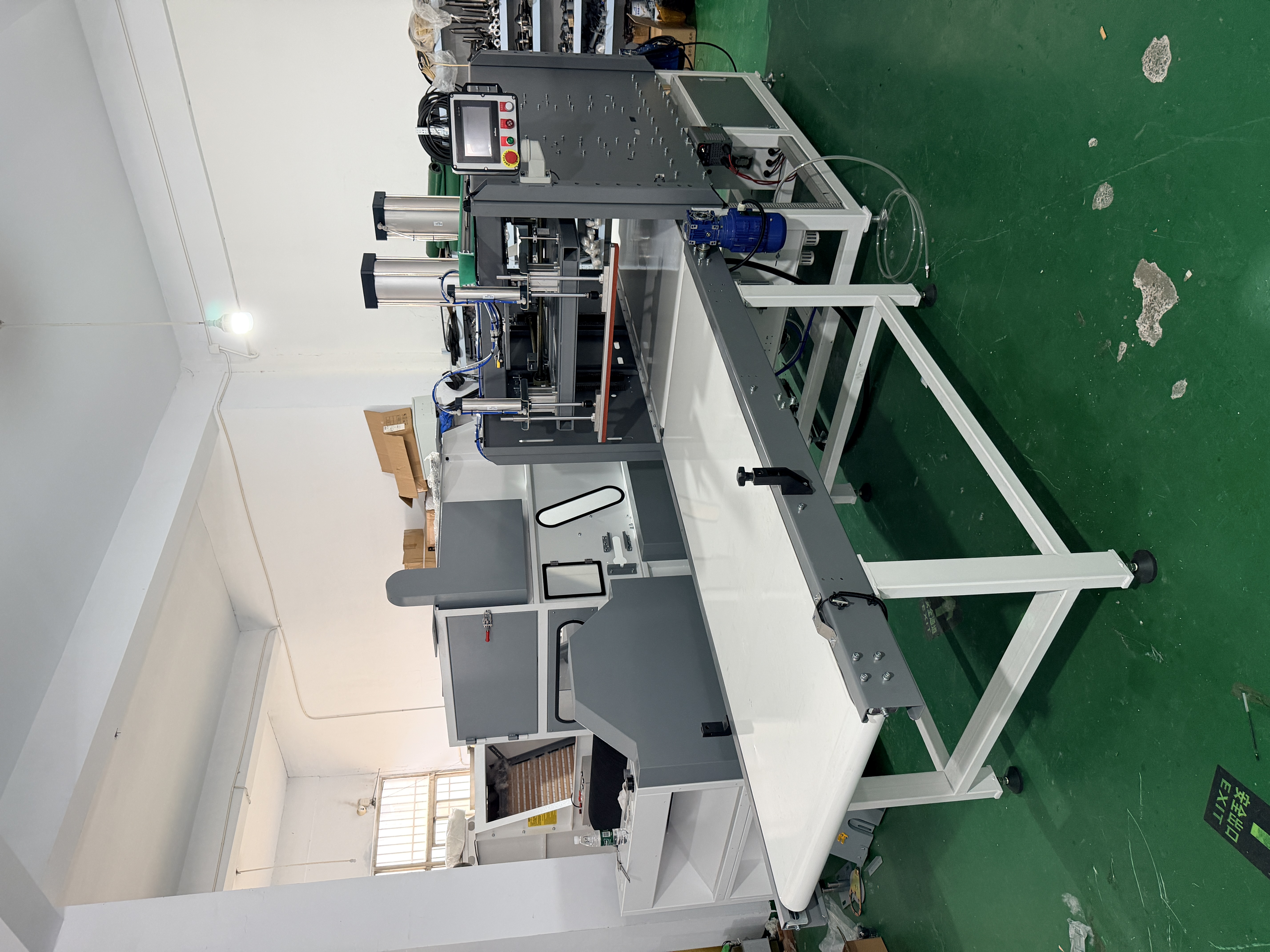
Packing and dispatch evidence closes the last gap between a completed test and a delivered machine.
Common Mistakes That Weaken an Otherwise Sound Delivery Agreement
- Comparing lead-time numbers across suppliers without comparing start-date definitions. A 15-day quote measured from material arrival can be slower than a 25-day quote measured from deposit.
- Accepting "100% tested" without a test list. If the criteria are not written, they cannot be failed — and a failed unit cannot be caught before shipment.
- Treating a certificate as model-specific by default. Scope wording matters. Obtain written confirmation of coverage for the exact model and configuration.
- Using the 1-unit minimum order as a sample without defining sample acceptance. A trial unit is only useful if the same test criteria that govern the production order also govern the sample.
- Detaching payment from inspection. Structure the balance so that acceptance evidence, not the calendar, triggers release.
- Leaving after-sales undefined until a fault appears. Warranty duration, coverage and the support route should be settled while the supplier still has an incentive to be specific.
Frequently Asked Questions
What should I verify first when a filling machine supplier claims CE and ISO9000 certification?
Start with the certificate documents themselves rather than the logo. For CE, ask for the certificate number, issuing body, harmonised standards and stated scope. KIVAS, for example, holds CE certificate M.2024.206.C100562 issued by UDEM, assessed against EN ISO 12100:2010 and EN 60204-1:2018 and valid from 9 May 2024 to 8 May 2029, with a stated scope of an automatic down fiber filling machine. Because scope is written at machine-type level, confirm in writing that it covers the model and configuration you are ordering. For ISO9000, request the certificate with its scope and validity period rather than a marketing statement.
What does choosing an OEM pillow filling machine manufacturer actually involve?
OEM supply means the machine is built to your specification and supplied under your brand or configuration rather than as a catalogue standard. In practice it changes four things in the delivery process: the engineering stage becomes buyer-dependent because drawings must be approved before assembly; the customization scope has to be listed explicitly — voltage, logo, colour, capacity and specialized production line layout are the categories KIVAS states it customizes; the inspection plan must reference your specification rather than a generic standard; and the lead-time start date should be tied to drawing approval, not deposit alone. KIVAS also offers ODM and overseas installation guidance, which extend the scope of what should be written into the agreement.
How do I check whether a stated monthly capacity of 60–150 units is credible?
Ask for the basis of the range and reconcile it with the supplier's annual figure. KIVAS states 60–150 units per month and 1000 units per year; those two numbers describe different things, and a credible supplier will explain that the monthly band reflects achievable peak output on standard configurations while the annual figure reflects a full-year mix including customized lines and testing time. Then verify the means of production — KIVAS reports a 3000 m² facility, 17 employees and 5 R&D engineers — and ask for your order's position in the current schedule. Audit access is the strongest check: KIVAS's capability record states it supports customer factory audits.
What lead time is realistic, and how should it be written into the contract?
KIVAS quotes 15–35 days, and that band reflects real variation: a standard machine built from stocked parts sits near the short end, while a customized line requiring drawing approval, long-lead components and full commissioning sits closer to the long end. Write three things into the contract — an explicit start-date definition (deposit, drawing approval or material arrival), a milestone table with dates rather than a single end date, and a notification and remedy procedure for slippage. Keep production lead time separate from the trade term, because EXW, FOB, CIF, CFR and DDP change where risk and cost transfer, not how fast the machine is built.
Can I start with one unit as a sample, and how does inspection work before shipment?
Yes — KIVAS sets a minimum order quantity of 1 unit, which can serve as a sample for testing. Define sample acceptance with the same criteria that will govern the production order, and request the pre-shipment test list in writing. KIVAS states that product acceptance is conducted through third-party inspection by SGS, including a pre-shipment test, so confirm the appointed body, the scope of the visit, the cost allocation and the non-conformance procedure before the machine reaches the packing stage. Commercial terms are a 30% T/T deposit before production with the 70% balance before ex-factory delivery. If you are preparing an evaluation file and want to align these checks with a specific configuration, you can request a factory audit slot, a capacity confirmation letter and a pre-shipment inspection plan from the KIVAS team at kivas@qdkws.com.
Conclusion: Turn the Delivery Claim Into a Delivery Record
Delivery assurance is not a promise a supplier makes; it is a set of documents a buyer holds. Capacity becomes credible when its unit, time base and physical means are explained. Lead time becomes manageable when it is broken into dated stages with a defined start point. Inspection becomes enforceable when the test list, the pass criteria, the record and the third-party scope are agreed before the deposit leaves your account.
Run the three layers in order, keep every answer in the evaluation file, and the comparison between suppliers shifts from who quotes the shortest number to who can prove the number is real. That is a better basis for a capital decision — and a much better position to negotiate from.
For buyers who want to check the evidence directly, the KIVAS product catalogue covers the pillow, quilt, down-jacket and toy filling ranges discussed here and can be downloaded for review: Qingdao Kaiweisi Product Catalog (PDF). Company details and current product information are published at www.qdkivas.com.
Have Questions or Need More Details?
Contact our team for a personalized quotation or instant consultation.
Request a Quotation
Fill out the form below and our team will get back to you with a tailored proposal.
WhatsApp Direct Chat
Prefer to chat in real-time? Message us on WhatsApp for instant assistance & quick answers.
- Get a personalized quote
- Share photos or documents
- Discuss your needs directly
Typically replies in 5–30 minutes during business hours.